

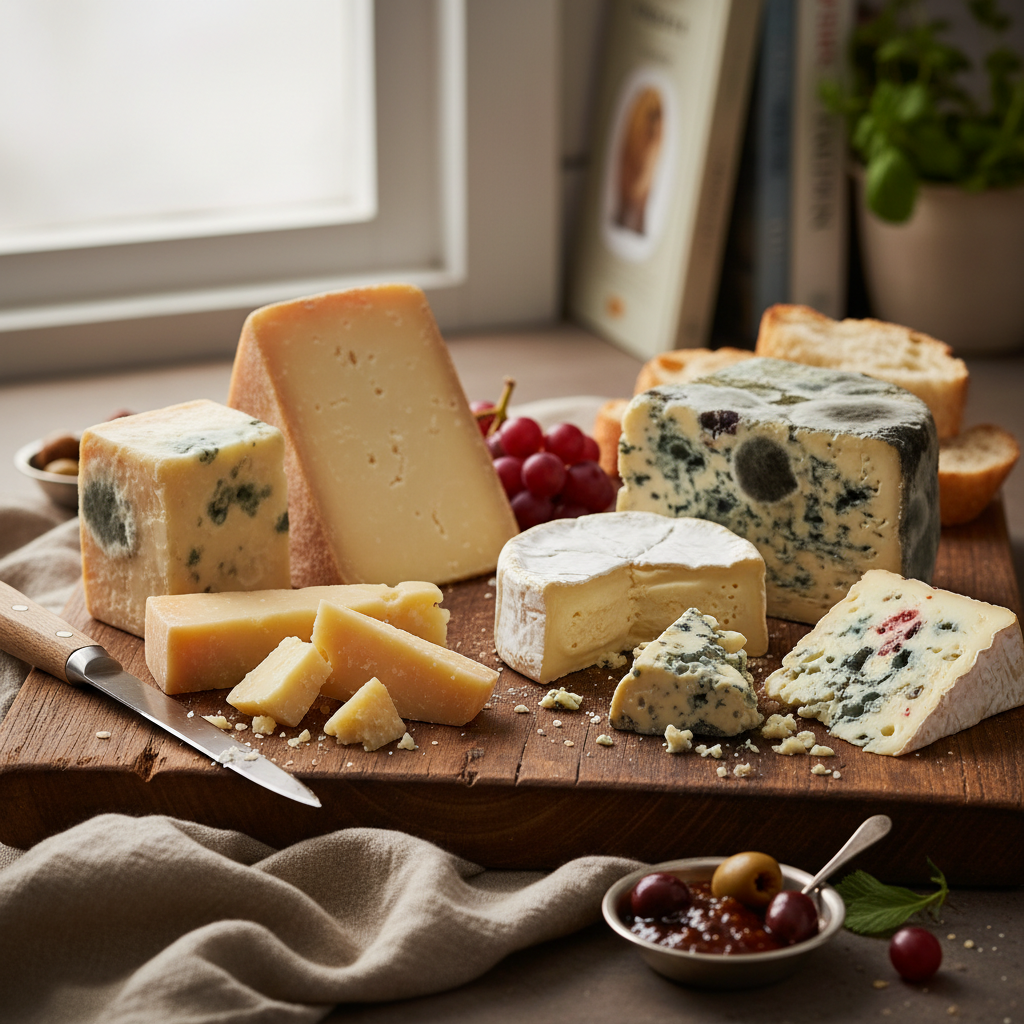
Understanding Mold on Cheese: Friend or Foe?
In the world of food safety, few questions cause as much hesitation as "can you eat moldy cheese?" For many foods, a speck of green or white fuzz is an immediate signal to head for the trash can. However, cheese is a biological outlier. Some of the world’s most expensive and celebrated cheeses—like Roquefort, Gorgonzola, and Camembert—are intentionally inoculated with specific types of mold to achieve their signature flavors and textures.
The challenge for the average consumer lies in distinguishing between "good" mold and "bad" mold. According to the USDA Food Safety and Inspection Service (FSIS), the safety of moldy cheese depends entirely on the density and moisture content of the cheese in question. Understanding the physical structure of your cheese is the first step in deciding whether your afternoon snack is a health hazard or a simple fix.
The Science of Mold: Why It Grows on Cheese
Mold is a microscopic fungus that travels through the air, water, and even on our hands. Cheese provides an ideal environment for mold growth because it is rich in protein, fats, and, in many cases, moisture. While commercial cheesemakers use specific, food-safe strains like Penicillium roqueforti, the wild molds that drift into your refrigerator are often undesirable and potentially dangerous.
When mold grows on food, it doesn't just sit on the surface. It develops "hyphae," which are root-like structures that can penetrate deep into the food. In soft, porous environments, these roots spread rapidly and invisibly. In dense, hard environments, these roots struggle to migrate, which is the scientific basis for the "cut and save" rule we will discuss later.
The Danger of Mycotoxins
While some molds are harmless, others produce mycotoxins—poisonous substances that can cause acute illness or long-term health issues. The World Health Organization (WHO) warns that some mycotoxins, such as aflatoxins, are carcinogenic. Because you cannot see the toxins or the microscopic "roots" of the mold without a microscope, following strict food safety guidelines is essential.
The Golden Rule: Hard vs. Soft Cheese
The most important factor in determining can you eat moldy cheese is the texture of the cheese. Food safety experts follow a simple divide based on moisture content and density.
Hard and Semi-Hard Cheeses: The "Cut and Keep" Group
Hard cheeses have a low moisture content and a dense structure, making it difficult for mold hyphae to penetrate far below the surface. If you find mold on these types of cheese, the USDA advises that it is generally safe to salvage the block.
- Common Examples: Cheddar, Parmesan, Swiss, Gruyère, Colby, and Provolone.
- The Procedure: Cut away at least one inch (2.5 cm) around and below the moldy spot. Do not touch the mold with your knife to avoid cross-contamination.
- Storage: After trimming, re-wrap the cheese in fresh parchment paper or plastic wrap and place it in a clean container.
Soft and Fresh Cheeses: The "Toss Immediately" Group
Soft cheeses have a high moisture content. Because of their porous nature, mold roots and invisible bacteria (like Listeria or Salmonella) can spread throughout the entire piece of cheese almost instantly once mold is visible on the surface.
- Common Examples: Brie, Camembert, Cottage Cheese, Ricotta, Cream Cheese, and Neufchâtel.
- The Procedure: If you see even a tiny speck of unauthorized mold on these cheeses, discard the entire container.
- Safety Note: For shredded, crumbled, or sliced cheeses (even if they were originally hard), the mold can easily spread through the gaps in the pieces. If one slice or one shred is moldy, the whole bag should be thrown away.
Comprehensive Cheese Safety Guide
The following table provides a quick reference guide based on FDA and USDA safety standards for various cheese types.
| Cheese Type | Examples | Action to Take |
|---|---|---|
| Hard Cheese | Parmesan, Pecorino, Manchego | Cut 1 inch below mold; keep the rest. |
| Semi-Hard Cheese | Cheddar, Gouda, Swiss, Edam | Cut 1 inch below mold; keep the rest. |
| Soft Cheese | Brie, Camembert | Discard if unexpected mold appears. |
| Fresh Cheese | Ricotta, Cottage Cheese, Cream Cheese | Toss immediately. |
| Shredded/Sliced | Any variety | Toss the entire package. |
A Special Case: Cheeses Made With Mold
It can be confusing when the cheese you purchased is supposed to be moldy. Cheeses like Blue, Roquefort, or Stilton have blue-green mold veins by design. Surface-ripened cheeses like Brie and Camembert have a white, furry rind (Penicillium camemberti).
When Good Mold Goes Bad
Even these "moldy" cheeses can go bad. You must look for off-molds. If your Blue cheese starts growing furry white or pink mold that isn't part of the blue veins, or if your Brie develops a slimy orange or black coating, it is time to discard it. Use your senses: if a cheese designed to be moldy starts smelling like ammonia, chemicals, or "dirty gym socks" rather than its usual pungent aroma, it is likely past its safety window.
Health Risks: What Happens if You Eat Moldy Cheese?
Most of the time, accidentally consuming a small amount of mold on a hard cheese will result in nothing more than a bad taste. However, for certain individuals and with certain types of mold, the risks are higher.
- Allergic Reactions: Some people have respiratory issues or allergic sensitivities to molds.
- Food Poisoning: Moldy soft cheeses are often breeding grounds for bacteria like E. coli, Listeria, and Salmonella. Symptoms include nausea, vomiting, abdominal cramps, and diarrhea.
- Long-term Mycotoxin Exposure: While rare from a single bite, chronic consumption of mycotoxins can lead to immune deficiency and an increased risk of cancer.
When to Seek Medical Attention
According to the CDC, if you experience persistent vomiting, high fever (above 102°F), or signs of dehydration after consuming suspect food, you should contact a healthcare provider immediately. This is especially critical for pregnant women, as Listeria (common in moldy soft cheeses) can be devastating to a pregnancy.
Preventing Mold Growth: Professional Storage Tips
To avoid the "cut or toss" dilemma, proper storage is key. Following these steps can extend the life of your cheese by weeks:
1. Temperature Control
Always store cheese in the refrigerator at temperatures below 40°F (4°C). Warm temperatures accelerate mold spores' metabolic activity. The vegetable crisper drawer is actually the best place for cheese because it maintains a consistent temperature and slightly higher humidity, which prevents the cheese from drying out.
2. The "Breathable" Wrap
Cheese is a living product. While plastic wrap is common, it traps moisture and can encourage the "bad" kind of mold growth. Professionals recommend cheese paper or parchment paper. This allows the cheese to breathe without drying out. If you use plastic wrap, wrap it loosely or replace the wrap every few days.
3. Cross-Contamination Awareness
Never touch the face of the cheese with your fingers if you can avoid it. The oils and bacteria on your skin can jumpstart mold growth. Use a clean knife every time you slice from the block.
4. Freeze with Caution
Can you freeze cheese to prevent mold? Yes, but it changes the texture. Hard cheeses can be frozen for up to 6 months; however, they will become crumbly and are best used for cooking (melting into sauces or soups) rather than fresh eating.
Actionable Advice: The Five-Point Safety Check
Before you decide can you eat moldy cheese, run through this checklist:
- Texture: Is it hard (save) or soft (toss)?
- Appearance: What color is the mold? (Invasive orange, black, or bright red molds are usually more dangerous than white or green.)
- Smell: Does it smell like ammonia or fermented fruit? (If yes, toss.)
- Structure: Is it a solid block or is it sliced/shredded? (Only solid blocks are safe to trim.)
- The 1-Inch Rule: Can you safely remove a 1-inch perimeter without touching the mold to the "clean" area?
The Verdict
The answer to "can you eat moldy cheese?" is a qualified yes, but only for hard blocks of cheese. For everything else—shredded, sliced, and soft varieties—the risks far outweigh the cost of a replacement. When in doubt, follow the famous food safety adage: "When in doubt, throw it out."
By understanding the science of mold growth and following USDA guidelines, you can enjoy your favorite cheeses with confidence. Remember that food safety starts at the grocery store—buy cheese in smaller quantities to ensure it stays fresh, and always practice proper storage techniques to keep your kitchen safe and your meals delicious.
Conclusion
Managing mold on cheese is a balance of culinary knowledge and biological caution. While we have been taught to fear mold, in the context of hard cheeses, it is often just a surface-level nuisance. However, for soft and fresh cheeses, surface mold is a warning sign of a systemic issue within the food. By adhering to the moisture-based rules and the one-inch trimming standard, you can minimize food waste while protecting your health. Always prioritize the safety of vulnerable populations, including children and the elderly, by opting for the freshest products possible.