

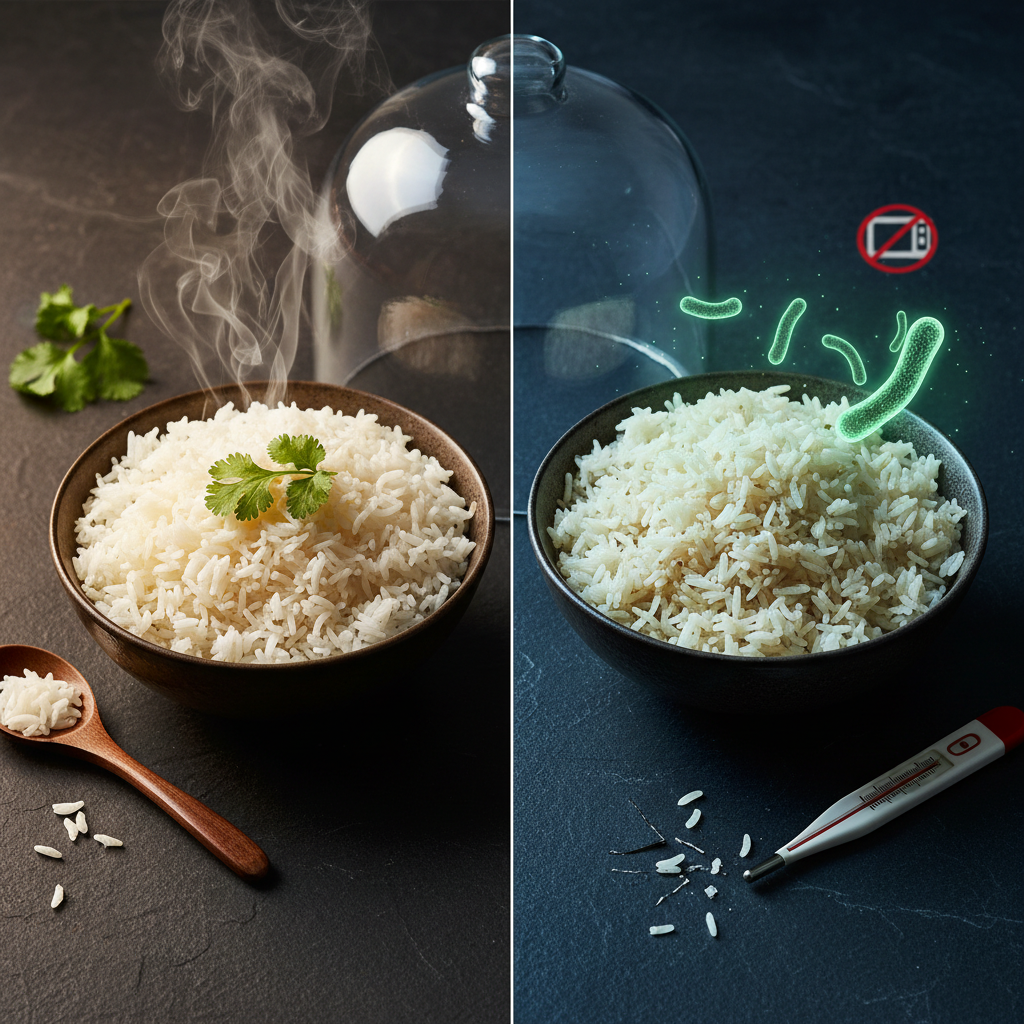
Understanding the Hidden Risk in Your Rice Cooker
For most of us, rice is a harmless, comforting staple that forms the foundation of countless meals. However, beneath its simple exterior lies a potential biological hazard that many home cooks overlook. The phenomenon often referred to as "Fried Rice Syndrome" is a very real form of food poisoning caused by the bacterium Bacillus cereus. While it might sound alarmist to suggest that leftover rice can be fatal, the medical reality is that improper handling of cooked rice has led to severe illness, liver failure, and in rare, tragic cases, death.
According to the Centers for Disease Control and Prevention (CDC), foodborne illnesses affect 1 in 6 Americans every year. Bacillus cereus specifically targets starchy foods, with rice being its primary vehicle. Understanding the lifecycle of this bacterium and how it interacts with temperature is the key to enjoying your leftovers safely. In this comprehensive guide, we will dive into the science of rice safety, the "Danger Zone," and the strict protocols recommended by the FDA and USDA to keep your kitchen safe.
What is Bacillus Cereus? The Science of "Fried Rice Syndrome"
Bacillus cereus is a microscopic, spore-forming bacterium found naturally in soil and vegetation. Because rice is grown in the ground, it is almost inevitably contaminated with these spores. Unlike many other bacteria that are destroyed by the heat of boiling water, Bacillus cereus is remarkably resilient.
The Two-Phase Threat: Spores vs. Toxins
To understand the danger, we must distinguish between the spores and the vegetative cells:
- The Spore Phase: These are like tiny, armored seeds. They can survive the high temperatures of a rice cooker or a pot of boiling water. They remain dormant while the rice is hot, waiting for the environment to become favorable.
- The Vegetative Phase: As the rice cools down and enters the "Danger Zone" (between 40°F and 140°F), these spores "wake up." They begin to multiply rapidly and, most importantly, they produce toxins.
One specific toxin produced by Bacillus cereus is heat-stable. This means once the toxin is created because the rice sat out too long, no amount of microwaving, frying, or reheating will neutralize it. You are essentially eating a chemical byproduct that your body cannot easily process.
The Danger Zone: Why Room Temperature is Your Enemy
The USDA Food Safety and Inspection Service defines the "Danger Zone" as the temperature range between 40°F (4°C) and 140°F (60°C). In this range, bacteria populations can double every 20 minutes.
When rice is left at room temperature (usually around 70°F), it provides the perfect moist, nutrient-rich environment for Bacillus cereus. If cooked rice sits out for more than two hours, the bacterial load can reach levels high enough to cause immediate illness. In warmer environments (above 90°F), this window of safety shrinks to just one hour.
The Statistics of Risk
| Time at Room Temp | Safety Status | Action Required |
|---|---|---|
| Under 1 Hour | Safe | Refrigerate immediately |
| 1 - 2 Hours | Marginal | Chill in shallow containers fast |
| Over 2 Hours | Dangerous | Discard immediately |
| Overnight | Toxic | High risk of severe poisoning; Discard |
Symptoms of Bacillus Cereus Poisoning
If you have consumed contaminated leftover rice, symptoms usually manifest in one of two ways, depending on the type of toxin produced by the bacteria.
1. The Emetic (Vomiting) Syndrome
This is the most common form associated with rice. It is caused by a toxin produced in the food before you eat it. Symptoms usually begin very quickly—within 1 to 6 hours of ingestion. Symptoms include intense nausea and projectile vomiting. Because it mimics the "stomach flu," many people do not realize their dinner was the culprit.
2. The Diarrheal Syndrome
This occurs when the bacteria are ingested and produce toxins in the small intestine. Symptoms appear 6 to 15 hours after consumption and include watery diarrhea and abdominal cramps. While generally less severe than the emetic type, it can still lead to significant dehydration.
Note: If you experience severe symptoms like high fever, bloody stools, or inability to keep liquids down, the FDA recommends seeking medical attention immediately, especially for the elderly, children, or immunocompromised individuals.
Best Practices for Leftover Rice Food Safety
Preventing illness doesn't mean you have to stop cooking large batches of rice. It simply means you must follow a strict "Cool, Chill, and Consume" protocol. Here is the authoritative way to handle cooked rice according to food safety experts.
1. Immediate Cooling is Critical
The goal is to get the rice from 140°F to 40°F as fast as possible. Do not leave a large, deep pot of hot rice on the counter to "cool down" before putting it in the fridge. The center of that pot will stay warm for hours, creating a bacterial breeding ground.
- Spread it out: Transfer the rice to a large baking sheet or shallow Tupperware containers. Increasing the surface area allows heat to escape rapidly.
- The 2-Hour Rule: Never leave rice out for more than two hours. Even if you are still eating, if the rice has been sitting in the cooker on "Keep Warm" (which is often below 140°F in older models), the clock is ticking.
2. Scientific Storage
Once cooled, seal the rice in airtight containers. According to the USDA, you should store leftover rice in the refrigerator at or below 40°F. Do not overcrowd your fridge, as air circulation is necessary to maintain these temperatures.
3. The Reheating Protocol
When you are ready to eat your leftovers, you must reheat them thoroughly. The FDA Food Code specifies that leftovers should be reheated to an internal temperature of 165°F (74°C). Use a food thermometer to check. While reheating won't kill the heat-stable toxins if they are already there, it will kill any new bacteria that may have started growing during storage.
Pro-Tip: Only reheat rice once. Every time you heat and cool rice, you provide another window for bacterial growth. If you have a large container of rice, only take out the portion you intend to eat and leave the rest in the fridge.
Debunking Common Myths About Rice Safety
Myth: Reheating rice kills all the germs.
Truth: As established, Bacillus cereus produces heat-stable toxins. Reheating will kill the bacteria, but it will not "clean" the rice of the poisons the bacteria already left behind. If the rice was left out too long, it is dangerous no matter how hot you make it.
Myth: If the rice smells fine, it's safe to eat.
Truth: Bacillus cereus does not change the smell, taste, or appearance of food. Unlike mold or spoilage bacteria, you cannot "sniff out" this pathogen. Safety is based entirely on time and temperature management, not sensory cues.
Myth: Rice cookers "Keep Warm" setting is always safe.
Truth: While many modern rice cookers hold rice at a safe temperature (above 140°F), many older or cheaper models dip into the Danger Zone. Furthermore, the rice at the top of the cooker can often cool down significantly higher than the rice at the bottom. Use a thermometer to verify your cooker’s "Keep Warm" temperature.
How to Safely Make Fried Rice
Fried rice is the most common source of Bacillus cereus outbreaks because the recipe literally calls for "day-old rice." To do this safely, follow these steps:
- Cook the rice thoroughly.
- Immediately spread it on a tray and place it in the refrigerator (uncovered for the first 30 minutes to let steam escape, then covered).
- Keep the rice refrigerated for no more than 3-4 days.
- When frying, ensure the rice reaches 165°F. The "fry" should be a high-heat, quick process.
- Serve and eat immediately. Do not leave the finished fried rice sitting out on a buffet line.
Summary Table: The Rice Safety Checklist
| Action | Requirement | Why? |
|---|---|---|
| Cooling | Within 1 hour | Prevents spore germination |
| Fridge Temp | 40°F or below | Slows bacterial growth |
| Storage Limit | 3 to 4 days | Prevents long-term pathogen buildup |
| Reheat Temp | 165°F minimum | Destroys vegetative bacteria |
| Reheat Frequency | One time only | Reduces "Danger Zone" exposure |
Conclusion: Respect the Grain
Leftover rice food safety is not about being paranoid; it is about following biological rules. Bacillus cereus is an invisible, odorless, and resilient foe that thrives on human negligence. By respecting the "Danger Zone" and prioritizing rapid cooling, you can enjoy your favorite rice dishes without risk.
The golden rule of food safety always applies: When in doubt, throw it out. If you cannot remember how long that container of rice has been on the counter, or if it has been in the fridge for more than four days, the risk to your liver and your life simply isn't worth a bowl of rice. Stay informed, keep your kitchen temperatures in check, and follow the guidelines set by the USDA and FDA to keep your family safe.