

Introduction to Egg Longevity and Safety
Few things are as frustrating as starting a recipe only to realize the carton of eggs in your refrigerator is past its printed "Sell By" date. However, according to the USDA (United States Department of Agriculture), eggs are often still perfectly safe and high-quality for weeks after the date stamped on the carton. In a world increasingly concerned with food waste, understanding the nuances of egg spoilage is both economically smart and environmentally responsible.
The key to managing your kitchen effectively is leaning on science-backed methods like the egg float test while understanding the biological defenses of the egg itself. This guide will provide you with a comprehensive look at how to tell if eggs are bad, the science of egg porosity, and the strict safety guidelines recommended by the FDA (Food and Drug Administration) to keep your family safe from foodborne illnesses like Salmonella.
Understanding the Dates on Your Egg Carton
Before testing your eggs, it is vital to understand what the numbers on the packaging actually mean. Most consumers confuse quality dates with safety dates, leading to millions of perfectly good eggs being tossed into the trash prematurely.
- Sell-By Date: This is a guide for the retailer. Most state laws do not require a sell-by date, but the USDA requires it for eggs graded with the USDA shield. Eggs are usually safe for 3 to 5 weeks after this date if kept refrigerated.
- Expiration (Exp) Date: Similar to "Best By," this is a quality indicator. It suggests when the eggs are at their absolute peak freshness but does not necessarily mean they are unsafe after this point.
- Pack Date (Julian Date): This is a three-digit code representing the day of the year the eggs were washed and packed. For example, "001" is January 1st, and "365" is December 31st. Eggs are generally considered fresh for 45 days after this pack date.
The Science of the Egg Float Test
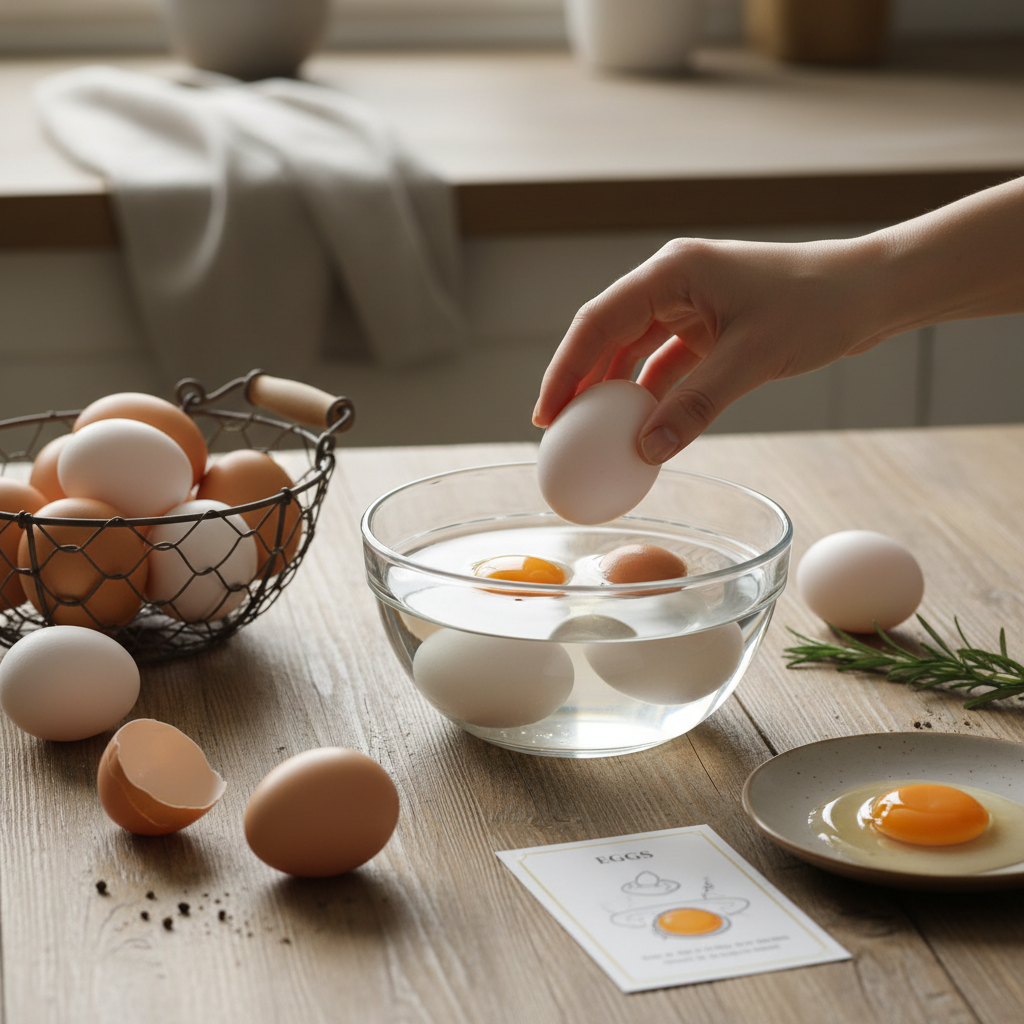
The egg float test is perhaps the most popular home method for checking egg freshness. But why does it work? It all comes down to the anatomy of the egg. Eggs have a porous shell that allows air to pass through. Inside the blunt end of the egg is a small air cell.
As an egg ages, moisture and carbon dioxide escape through the pores of the shell, and air enters to replace them. This causes the internal air cell to expand. The larger the air cell, the more buoyant the egg becomes. Here is how to perform the test correctly:
Step-by-Step Instructions for the Float Test
- Fill a deep bowl or a tall glass with cool water.
- Gently lower the egg into the water.
- The Sinkers: If the egg sinks to the bottom and lies flat on its side, it is extremely fresh.
- The Tilters: If the egg stays on the bottom but stands up on its point (semi-buoyant), it is older (about 2-3 weeks) but still perfectly safe to eat. These are actually the best eggs for hard-boiling because the slightly larger air cell makes them easier to peel.
- The Floaters: If the egg floats to the surface, it has matured significantly. While floating does not automatically mean the egg is rotten, it indicates it is very old. You should proceed with the "Sniff Test" before deciding to use it or discard it.
Beyond the Float Test: Other Reliability Measures
While the egg float test indicates age, it does not necessarily indicate safety or bacterial contamination. To be 100% certain of an egg's status, you should employ a multi-step verification process.
The Sniff Test
The most reliable way to tell if an egg has gone bad is the "Sniff Test." If an egg has been contaminated by bacteria or has truly spoiled, it will produce a potent, unmistakable sulfurous odor. This smell will be present whether the egg is raw or cooked. If you crack an egg and it smells "off" or pungent, discard it immediately and wash the bowl you cracked it into with hot, soapy water.
The Visual Inspection
Before cracking, inspect the shell. Is it slimy or powdery? A slimy shell can indicate bacterial growth, while a powdery residue can indicate mold. After cracking, check the whites (albumen) and the yolk. Fresh eggs have a bright yellow or orange yolk and thick whites that don't spread much. Older eggs have thinner whites that spread across the pan. However, thin whites do not mean the egg is bad; they simply indicate aging of the protein structures.
The Slosh Test
Hold the egg to your ear and shake it gently. If you hear a "sloshing" sound, it means the air cell has become very large and the contents have shrunk and thinned. Like the float test, this identifies an old egg but doesn't necessarily mean it is spoiled. Always follow up with a sniff test.
Egg Safety and Quality Comparison Table
| Test Result | Approximate Age | Best Culinary Use | Safety Status |
|---|---|---|---|
| Sinks, lies flat | 1-7 days | Poaching, Frying | Excellent |
| Sinks, stands upright | 2-3 weeks | Hard-boiling, Baking | Safe |
| Floats on surface | 4+ weeks | None (check first) | Questionable; check smell |
| Sulfuric odor | Varies | None | Discard Immediately |
The Risk of Salmonella: What You Need to Know
It is important to note that an egg contaminated with Salmonella Enteritidis can look, smell, and taste perfectly normal. According to the CDC (Centers for Disease Control and Prevention), Salmonella is the most common cause of food poisoning related to eggs. The bacteria can be present on the shell but can also be inside the egg if the hen's ovaries were infected.
Because you cannot "test" for Salmonella at home, food safety relies on two factors: storage temperature and cooking temperature. Cold temperatures prevent Salmonella from multiplying rapidly, and high heat kills the bacteria entirely.
Safe Storage Practices for Maximum Longevity
The way you store your eggs directly impacts how long they remain safe and high-quality. The FDA recommends the following guidelines:
1. Keep Them Cold
Eggs should be stored at a temperature of 40°F (4°C) or below. In the United States, eggs are washed before being sold, which removes the "bloom" (a natural protective coating). This makes refrigeration mandatory to prevent bacteria from entering the pores. Once an egg is refrigerated, it must stay refrigerated; a cold egg left out at room temperature can sweat, facilitating bacterial movement into the egg.
2. Use the Main Body of the Fridge
Many refrigerators have egg compartments in the door. Do not use them. The door is the warmest part of the refrigerator and experiences the most temperature fluctuations. Store your eggs in the coldest part of the fridge, usually on a middle or bottom shelf toward the back.
3. Keep Them in the Carton
The original carton is designed to protect the eggs from physical damage and from absorbing strong odors from other foods in the fridge (like onions or fish). It also keeps the "Sell-By" date easily accessible.
Actionable Advice: What to Do with Old Eggs
If you've performed the egg float test and determined your eggs are old but not spoiled, you don't have to throw them away. Older eggs are actually superior for certain culinary applications:
- Hard-Boiled Eggs: As eggs age, the pH of the white increases, which makes it bond less tightly to the inner shell membrane. This makes older eggs much easier to peel after boiling.
- Baking: For cakes, cookies, and brownies, the slightly thinner consistency of an older egg white won't noticeably affect the final product.
- Meringues: While fresh eggs are better for stable foams, older eggs actually volume up faster, though they may not be as stable.
Warning: The USDA recommends that people at higher risk for foodborne illness—including the elderly, pregnant women, and young children—should only consume eggs that are fresh and cooked until the yolks are firm.
When in Doubt, Throw It Out?
Food safety experts often use the phrase "When in doubt, throw it out." However, with eggs, the "doubt" is usually easy to resolve. If an egg passes the visual and sniff test, the chances of it being spoiled are incredibly low. Spoilage bacteria (the kind that makes you sick and makes food smell) are different from the aging process that makes an egg float.
If you crack an egg and see pink or iridescent egg whites, this is a sign of Pseudomonas bacteria, and the egg must be discarded immediately. Similarly, "blood spots" on the yolk are not a sign of spoilage; they are caused by the rupture of a small blood vessel during the egg's formation and are safe to eat.
Cooking Temperatures for Safety
The most effective way to ensure an egg is safe, regardless of its age, is proper cooking. The USDA Food Safety and Inspection Service recommends the following internal temperatures:
- Fried/Poached Eggs: Cook until both the white and yolk are firm.
- Casseroles and Quiches: Should reach an internal temperature of 160°F (71°C).
- Egg-based Sauces (like Hollandaise): Use pasteurized eggs or cook gently to 160°F.
Conclusion
Determining how to tell if eggs are bad is a combination of understanding label dates, using the egg float test to gauge age, and relying on your senses to detect spoilage. Remember that a floating egg is simply an old egg, not necessarily a dangerous one. By maintaining a consistent refrigerator temperature of 40°F and always checking for off-odors, you can drastically reduce food waste while keeping your kitchen safe.
Eggs are one of nature's most durable proteins. When handled with the care recommended by the FDA and USDA, they can remain a versatile and safe staple in your pantry long after the date on the carton has passed. Always trust your nose, cook thoroughly, and store intelligently.