

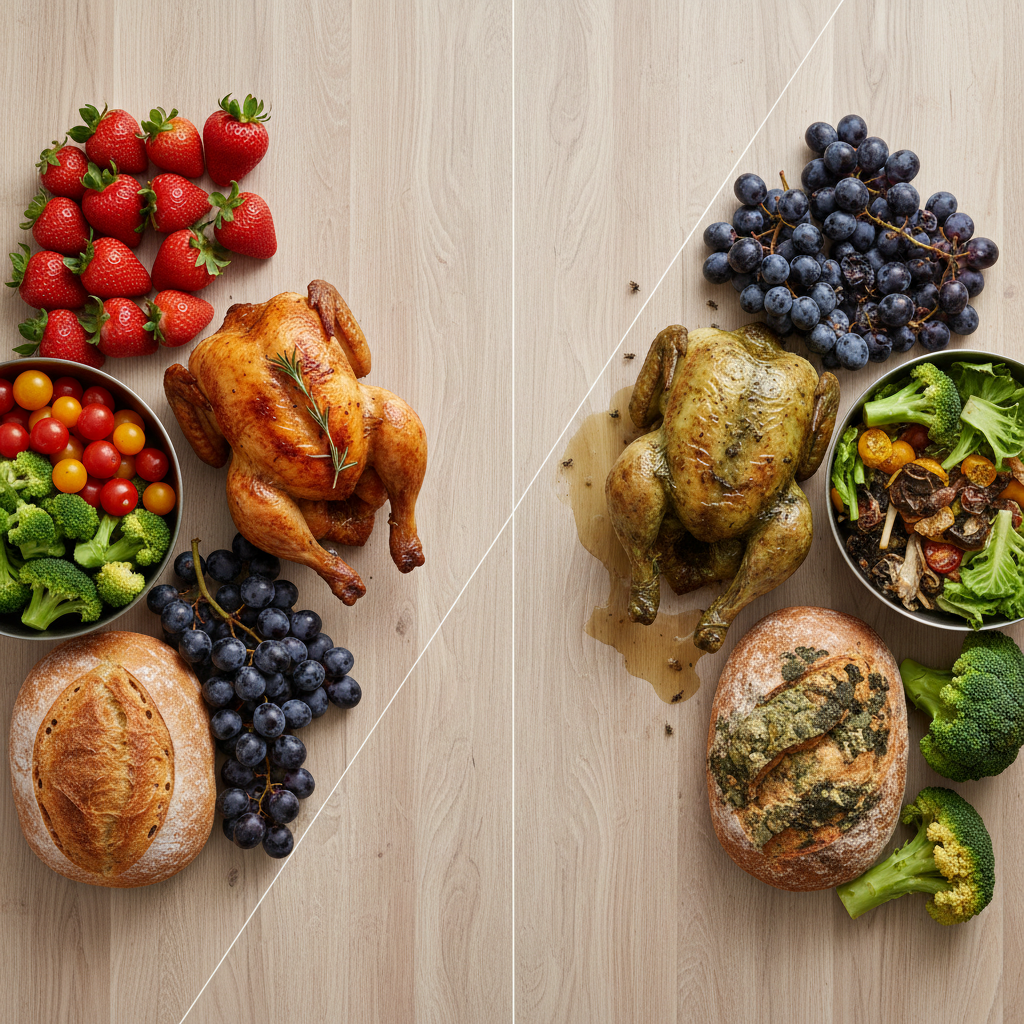
Understanding Food Expiration Dates: More Than Just a Number
Walking through the grocery store aisles or peering into your refrigerator, you are confronted with a confusing array of dates. You might see "Sell By," "Best if Used By," "Use By," or "Freeze By." For many consumers, these dates are a primary source of anxiety, leading to billions of pounds of perfectly safe food being discarded prematurely every year. According to the USDA Economic Research Service, roughly 31% of food loss at the retail and consumer levels is due to confusion over date labeling.
The reality is that, with the exception of infant formula, product dating is not generally required by Federal regulations in the United States. Instead, these dates are provided by manufacturers to indicate quality, not necessarily safety. This guide will provide a deep dive into the nuances of food expiration dates, helping you distinguish between food that has lost its peak flavor and food that poses a genuine health risk.
The Differences Between Popular Date Labels
To navigate your kitchen safely and economically, you must first master the vocabulary of the food industry. Manufacturers use specific terminology to communicate different messages to retailers and consumers.
- "Best if Used By/Before": This date indicates when a product will be at its best flavor or quality. It is not a purchase or safety date. Most shelf-stable foods are safe to consume well after this date, though the texture or intensity of flavor may decline.
- "Sell-By": This date tells the store how long to display the product for sale for inventory management. It is not a safety date. You can typically eat food that is past its "Sell-By" date as long as it has been stored properly.
- "Use-By": This is the last date recommended for the use of the product while at peak quality. Unlike the other labels, "Use-By" dates on infant formula are strictly regulated for safety and nutrition and should never be ignored. For other products, it is still primarily a quality indicator.
- "Freeze-By": This indicates when a product should be frozen to maintain peak quality. It does not mean the food is unsafe to eat if not frozen by that date, but its quality may deteriorate if left in the refrigerator.
The Science of Food Spoilage vs. Foodborne Illness
One of the most important distinctions in food safety is the difference between spoilage bacteria and pathogenic bacteria. Understanding this distinction is key to knowing when a date label matters and when your senses are your best tool.
Spoilage bacteria are the microorganisms that cause food to deteriorate. They result in off-odors, strange flavors, and slimy textures. While unpleasant, spoilage bacteria generally do not make you dangerously ill. If your milk smells sour or your bread has a spot of mold, the spoilage bacteria are telling you the quality has failed.
Pathogenic bacteria, such as Salmonella, Listeria, and E. coli, are much more dangerous. These bacteria cause foodborne illness but—crucially—they typically do not change the smell, look, or taste of the food. This is why proper temperature control and handling are more important than the date on the package. A chicken breast kept at room temperature for three hours is dangerous regardless of the "Sell-By" date, while a chicken breast kept consistently at 34°F (1°C) may be safe slightly past its date.
Recommended Storage Times for Common Foods
Because date labels are often about quality, the FDA and USDA provide general guidelines for how long foods remain safe and high-quality when stored at the correct refrigerator temperature (40°F / 4°C or below).
| Food Category | Refrigerator (40°F or below) | Freezer (0°F or below) |
|---|---|---|
| Ground Meat (Beef, Turkey, Pork) | 1 - 2 Days | 3 - 4 Months |
| Fresh Poultry (Chicken, Turkey) | 1 - 2 Days | 9 - 12 Months |
| Fresh Fish | 1 - 2 Days | 6 Months |
| Eggs (in shell) | 3 - 5 Weeks | Do not freeze in shell |
| Milk (opened) | 7 Days | 3 Months (texture changes) |
| Hard Cheese (Cheddar, Parmesan) | 6 Months (unopened), 3-4 Weeks (opened) | 6 Months |
| Leftovers (Cooked) | 3 - 4 Days | 2 - 3 Months |
High-Risk Foods: When to Be Strict with Dates
While most "Best By" dates are flexible, certain categories of food require a more conservative approach due to the way they are processed or their susceptibility to dangerous pathogens like Listeria monocytogenes, which can grow even at refrigerated temperatures.
Deli Meats and Unpasteurized Products
Pre-packaged deli meats and sliced meats from the counter should be consumed within 3 to 5 days of opening or purchase. Listeria is a particular concern with these products. Similarly, unpasteurized (raw) milk or juices have a much higher risk of carrying pathogens and should be consumed strictly within the recommended timeframes.
Soft Cheeses
Unlike hard cheeses, soft cheeses (like Brie, Camembert, or Ricotta) have high moisture content. This makes them a breeding ground for bacteria once the "Use-By" date has passed or if they have been opened for more than a week. If you see mold on a soft cheese, discard the entire container.
Infant Formula: The Only True Expiration Date
The FDA requires a "Use-By" date on infant formula. This is the only food product where the date is federally mandated for safety and nutritional integrity. As formula ages, the nutrients can break down, and the physical stability of the liquid can change (clumping). Never use infant formula past its date.
Actionable Advice for Food Safety and Waste Reduction
Reducing food waste doesn't mean compromising your health. By implementing a few professional kitchen habits, you can extend the life of your groceries and eat with confidence.
1. Manage the "Cold Chain"
The "Cold Chain" refers to keeping food at a constant, safe temperature from the store to your table. The CDC recommends never leaving perishable food out of the refrigerator for more than 2 hours (or 1 hour if the outdoor temperature is above 90°F). Use an appliance thermometer to ensure your refrigerator stays at 40°F (4°C) and your freezer at 0°F (-18°C).
2. The "First In, First Out" (FIFO) Method
Professional chefs use FIFO to manage inventory. When you get home from the store, move older items to the front of the fridge and put new items in the back. This ensures you use products before their quality diminishes.
3. Use Personal "Sense Checks"
Before tossing food based on a date, perform a sensory evaluation:
- Sight: Check for visible mold, unusual color changes (like grey meat or slimy film), or bulging cans.
- Smell: Trust your nose. If a product has a sour, putrid, or "off" odor, discard it immediately.
- Texture: Sticky or slimy textures on meat and vegetables are clear indicators of spoilage.
4. The Freezer is Your Best Friend
If you realize you won't eat meat or bread by the date on the package, freeze it immediately. Freezing "pauses" the clock. While the quality might slightly decrease over many months, the food will remain safe indefinitely if kept at a constant 0°F.
Special Considerations: Canned and Dry Goods
Shelf-stable foods are the champions of longevity. Canned goods are commercially sterile, meaning they are heated to a temperature that kills all harmful bacteria. According to the USDA, most canned foods (like canned beans, soups, and vegetables) are safe to eat for years past the "Best By" date, provided the can itself is in good condition.
Warning signs for canned goods include:
- Deep dents (especially on the seams)
- Bulging or swollen lids (an indicator of Clostridium botulinum)
- Rust that cannot be wiped off
- A loud "hiss" or spurting liquid when opening
Dry goods like pasta, white rice, and dried beans can last for decades if stored in a cool, dry place. While they may take longer to cook or lose some vitamin content over ten or twenty years, they remain a safe caloric resource.
Conclusion: Empowered Food Management
Understanding food expiration dates is about finding the balance between safety and sustainability. Remember that most dates are the manufacturer's "promise" of peak quality, not a hard deadline for safety. By maintaining a clean refrigerator at 40°F, practicing FIFO, and knowing which high-risk foods require caution, you can significantly reduce food waste in your home.
Always prioritize safety when it comes to infant formula, deli meats, and soft cheeses. For everything else, use your senses, follow the USDA storage guidelines, and remember: When in doubt, throw it out. But with your new understanding of "Best By" versus "Use By," you’ll likely find yourself throwing out much less.