

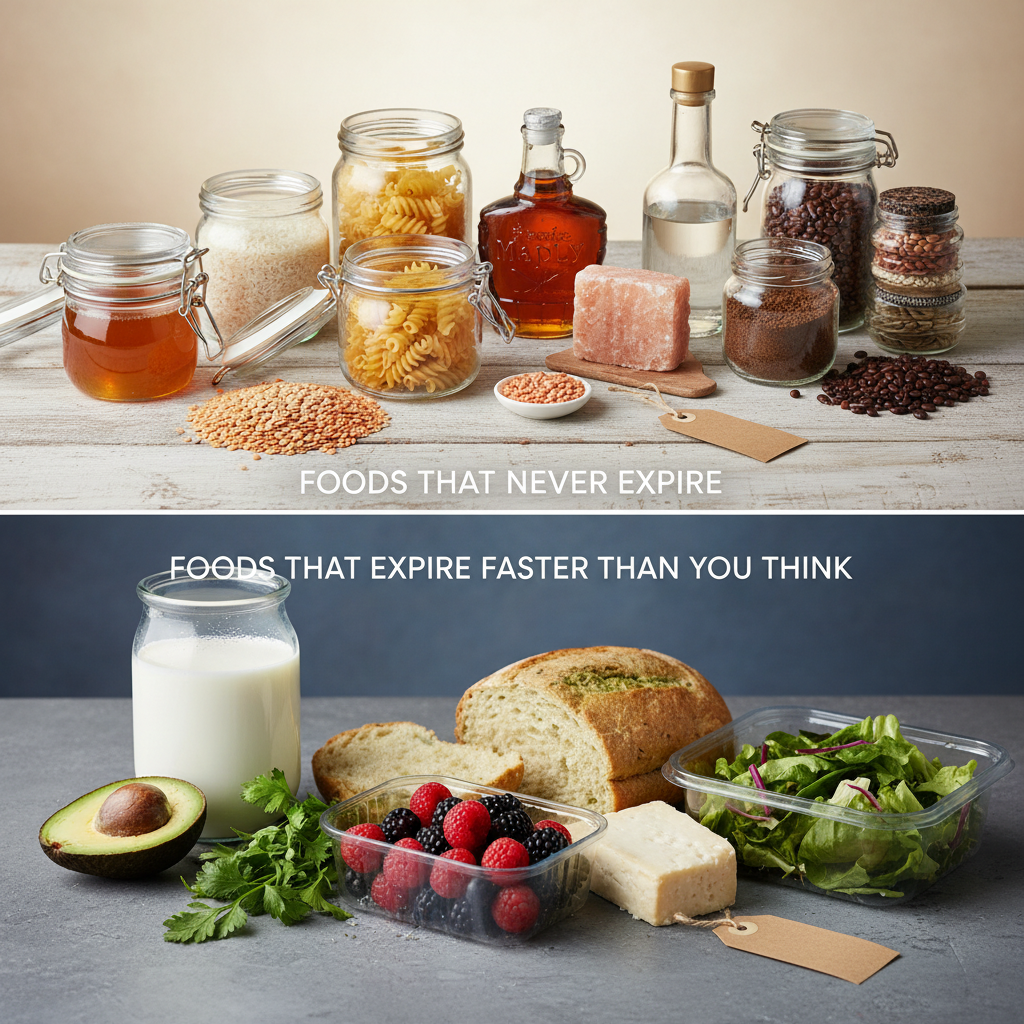
Introduction to Food Longevity and Safety
In a world where food waste is a growing concern, understanding the true shelf life of what is in your pantry is both an economic and environmental necessity. Many consumers are misled by "Best By" and "Sell By" dates, which often refer to food quality rather than absolute safety. However, the science of food preservation reveals a fascinating reality: some items are virtually immortal due to their chemical composition, while others harbor invisible pathogens far sooner than we realize.
According to the USDA Food Safety and Inspection Service, shelf-stable foods are safe indefinitely from a food safety standpoint as long as the packaging remains intact and the storage conditions are cool and dry. This guide dives deep into the science of shelf life, highlighting 15 foods that never expire and contrasting them with 10 high-risk items that spoil faster than you might think. By mastering these distinctions, you can optimize your kitchen for safety, efficiency, and long-term preparedness.
The Immortals: 15 Foods That Never Expire
Certain foods possess unique physical properties—such as low moisture content, high acidity, or natural antimicrobial agents—that make them inhospitable to bacteria and fungi. When stored correctly, these items can last for decades, if not lifetimes.
1. White Rice
While brown rice has a high oil content that causes it to go rancid within six months, white rice (including basmati, jasmine, and arborio) can last 30 years or more. To achieve this longevity, researchers at Utah State University suggest storing white rice in oxygen-free containers at temperatures below 40°F (4°C). At room temperature, it remains safe and edible indefinitely if kept away from pests and moisture.
2. Honey
Honey is arguably the only food that truly never expires. Archaeologists have famously found edible honey in 3,000-year-old Egyptian tombs. Its secret lies in its low moisture content and acidic pH. While honey may crystallize (turn cloudy or hard) over time, this is a physical change, not a sign of spoilage. To restore it, simply place the jar in a warm water bath.
3. Salt
Pure sodium chloride is a mineral, not a biological product, making it impossible to "spoil." Salt has been used for centuries as a preservative precisely because it draws moisture out of bacteria through osmosis, killing them. Note that while pure sea salt and kosher salt last forever, iodized salt has a shorter shelf life of about five years because the added iodine degrades over time.
4. Soy Sauce
Due to its incredibly high salt concentration and fermented nature, unopened soy sauce can last indefinitely. Even after opening, the high sodium content prevents the growth of harmful bacteria for many years, though the flavor may begin to shift slightly as it oxidizes in the refrigerator.
5. Sugar
Like salt, granulated sugar (white, brown, and powdered) does not support bacterial growth because it lacks moisture. The primary challenge with sugar is preventing it from hardening into a brick. Storing it in an airtight container to keep out humidity ensures it remains usable for decades.
6. Dried Beans
Legumes such as kidney beans, chickpeas, and lentils can last indefinitely if kept dry. While they may require longer soaking and cooking times after 5–10 years to soften the seed coat, their nutritional value remains largely intact. The FDA notes that dried beans are a cornerstone of long-term emergency food supplies for this reason.
7. Pure Maple Syrup
Unopened pure maple syrup is resistant to microbial growth due to its high sugar concentration. According to the Vermont Maple Sugar Makers' Association, if you store it in the freezer, it will last forever. If mold develops on the surface of an opened container, the USDA suggests it can be removed and the syrup brought to a boil for safety, though many experts recommend discarding it if you are immunocompromised.
8. Distilled White Vinegar
The high acidity of white vinegar makes it self-preserving. It does not expire or lose potency over time. This makes it an excellent bulk item to keep for both culinary uses and as a natural disinfectant for food-contact surfaces.
9. Cornstarch
As long as it is kept completely dry and stored in a cool place, cornstarch will never spoil. Because its molecular structure is highly stable, it can be used as a thickening agent 20 years from now just as effectively as today.
10. Pure Vanilla Extract
Pure vanilla extract is made with a high-proof alcohol base, which acts as a permanent preservative. While imitation vanilla may have a shelf life of a few years, pure extract actually mellows and improves in flavor over time, much like a fine wine.
11. Pemmican
Invented by indigenous peoples of North America, pemmican is a mixture of dried meat, tallow (rendered fat), and sometimes dried berries. When prepared correctly and kept in a cool, dark place, it can last for decades without refrigeration, making it the ultimate survival food.
12. Instant Coffee
Unlike whole bean or ground coffee, which loses its oils and flavor within months, instant coffee is freeze-dried and contains no moisture. If kept in a sealed, moisture-proof container, it can remain safely in your pantry for 20 years or more.
13. Hard Liquor
Distilled spirits like whiskey, gin, rum, and tequila do not expire. As long as the bottle is sealed and stored out of direct sunlight, the high alcohol content prevents any bacterial growth. Once opened, oxidation may slightly change the flavor over several years, but the liquid remains safe to consume.
14. Ghee (Clarified Butter)
By simmering butter and removing the water and milk solids, you are left with pure fat known as ghee. Because the components that typically spoil (water and protein) are removed, unopened ghee can last for several years at room temperature and much longer in the freezer.
15. Powdered Milk
Non-fat dry milk (powdered milk) can last up to 20 years when stored in a cool, dry environment. The removal of moisture and fat (which can go rancid) allows it to maintain its nutritional integrity far beyond the capabilities of liquid dairy.
Comparison of Long-Term Storage Requirements
| Food Item | Ideal Packaging | Temperature Requirement | Shelf Life |
|---|---|---|---|
| White Rice | Mylar Bags/Airtight Cans | Below 70°F (21°C) | 30+ Years |
| Honey | Glass Jar | Room Temp | Indefinite |
| Dried Beans | Vacuum Sealed | Cool & Dark | Indefinite |
| Sugar | Moisture-proof container | Dry any temp | Indefinite |
The Deceptive: 10 Foods That Expire Faster Than You Think
While some foods seem like they should last a long time, biological and chemical processes can make them dangerous or unpalatable much sooner than consumers anticipate. Following CDC and FDA guidelines is crucial for these high-risk items.
1. Ground Meat
While a steak can last 3–5 days in the fridge, ground beef or turkey expires much faster. The grinding process increases the surface area exposed to oxygen and distributes bacteria throughout the meat. The USDA recommends cooking or freezing ground meat within 1 to 2 days of purchase.
2. Brown Rice
As mentioned earlier, brown rice is the "healthy" version that unfortunately spoils quickly. Because it still contains the bran and germ layers, it is rich in natural oils. These oils oxidize and turn rancid within 6 months at room temperature. If you must stock up, store it in the freezer.
3. Spices (Ground)
While ground spices won't necessarily make you sick, they lose their essential oils and antimicrobial properties much faster than people realize. Most ground spices lose their potency within 6–12 months. After this point, they provide little flavor and can even harbor pantry pests if the seal is not tight.
4. Whole Wheat Flour
Similar to brown rice, whole wheat flour contains the oily germ of the wheat kernel. While white flour can last two years, whole wheat flour can go rancid in just 3 months in the pantry. To extend its life to 6 months, it must be stored in the refrigerator.
5. Potatoes
Many people store potatoes in a dark bin and forget about them. However, potatoes can produce solanine, a toxic alkaloid, if they start to sprout or turn green. Furthermore, if stored near onions, the gases from the onions will cause the potatoes to rot significantly faster.
6. Cooking Oils (Olive and Vegetable)
Oil is often bought in large jugs, but it is highly susceptible to heat, light, and oxygen. Extra virgin olive oil typically has a shelf life of only 12–18 months. Once opened, it should be consumed within 30–60 days before it begins to oxidize and lose its health benefits.
7. Canned Low-Acid Vegetables
We think of canned goods as lasting forever, but low-acid canned goods (like corn, beans, and peas) are more prone to chemical reactions with the metal can over time. The USDA suggests that for peak quality, these should be used within 2 to 5 years, whereas high-acid foods (tomatoes/fruits) only last 12–18 months.
8. Yeast
Yeast is a living organism. Even in its dry, granulated form, it loses its leavening power over time. An opened jar of yeast in the pantry may expire in as little as 3 months. Always store yeast in the refrigerator or freezer to keep the cells dormant but alive.
9. Nuts and Seeds
Nuts are high in polyunsaturated fats, which are highly unstable. Walnuts and pecans, for instance, can turn rancid in just a few months at room temperature. Always taste a nut before using it in a recipe; a bitter or "paint-like" flavor indicates the fats have oxidized.
10. Deli Meats
According to CDC food safety data, deli meats are a primary source of Listeria monocytogenes. Even if the package is unopened, the shelf life is relatively short. Once a package of sliced deli meat is opened, it should be consumed within 3 to 5 days, regardless of the "Best By" date.
Critical Food Safety Temperatures and Guidelines
To maximize the life of your food and prevent foodborne illness, the FDA emphasizes the importance of the "Temperature Danger Zone." This is the temperature range between 40°F and 140°F (4°C and 60°C) where bacteria can double in number every 20 minutes.
- Refrigeration: Keep your refrigerator at or below 40°F (4°C).
- Freezing: Keep your freezer at 0°F (-18°C). Freezing to this temperature keeps food safe indefinitely, though quality will eventually decline.
- Dry Storage: The ideal pantry temperature is between 50°F and 70°F (10°C - 21°C).
- Humidity: High humidity (above 60%) can cause even "forever" foods like salt and sugar to clump and potentially grow mold if organic contaminants are present.
Actionable Tips for Pantry Management
Managing a kitchen efficiently requires a balance between stocking "immortal" foods and vigilantly monitoring perishable ones. Here is how to apply this knowledge:
Implement the FIFO Method
First In, First Out (FIFO) is the gold standard in professional kitchens. Always place newer purchases at the back of the shelf so that older items are used first. This is particularly important for the "Deceptive 10" list, such as oils and whole-grain flours.
Check for "Botulism Signs"
When dealing with long-term canned goods, never consume food from a container that is bulging, leaking, or deeply dented along the seams. These are signs of Clostridium botulinum, a bacterium that produces a deadly toxin in low-oxygen environments. While the "immortal" foods are safe, the containers they are in must remain structurally sound.
Invest in Proper Secondary Packaging
If you intend to keep white rice or beans for 20+ years, the original plastic bag from the grocery store is insufficient. Use food-grade buckets, Mylar bags with oxygen absorbers, or vacuum-sealed glass jars. Oxygen is the primary enemy of food longevity, causing fats to go rancid and promoting the growth of aerobic bacteria.
Conclusion: Quality vs. Safety
In the world of food safety, there is a distinct difference between a product being safe to eat and good to eat. While the 15 "immortal" foods listed above can technically be eaten decades from now, their flavor, texture, and vitamin content may degrade slightly over time. Conversely, the 10 foods that expire quickly represent a genuine food safety risk if ignored.
By prioritizing the storage of long-term staples like honey, salt, and white rice, and being cautious with the rapid turnover of oils, nuts, and ground meats, you can create a kitchen that is both resilient and safe. Always trust your senses—if a food looks off, smells sour, or has a changed texture—follow the safety mantra: "When in doubt, throw it out."
For more specific storage times for over 400 items, consult the FoodKeeper App provided by the USDA, which offers data-backed timelines for maintaining food freshness and safety.