

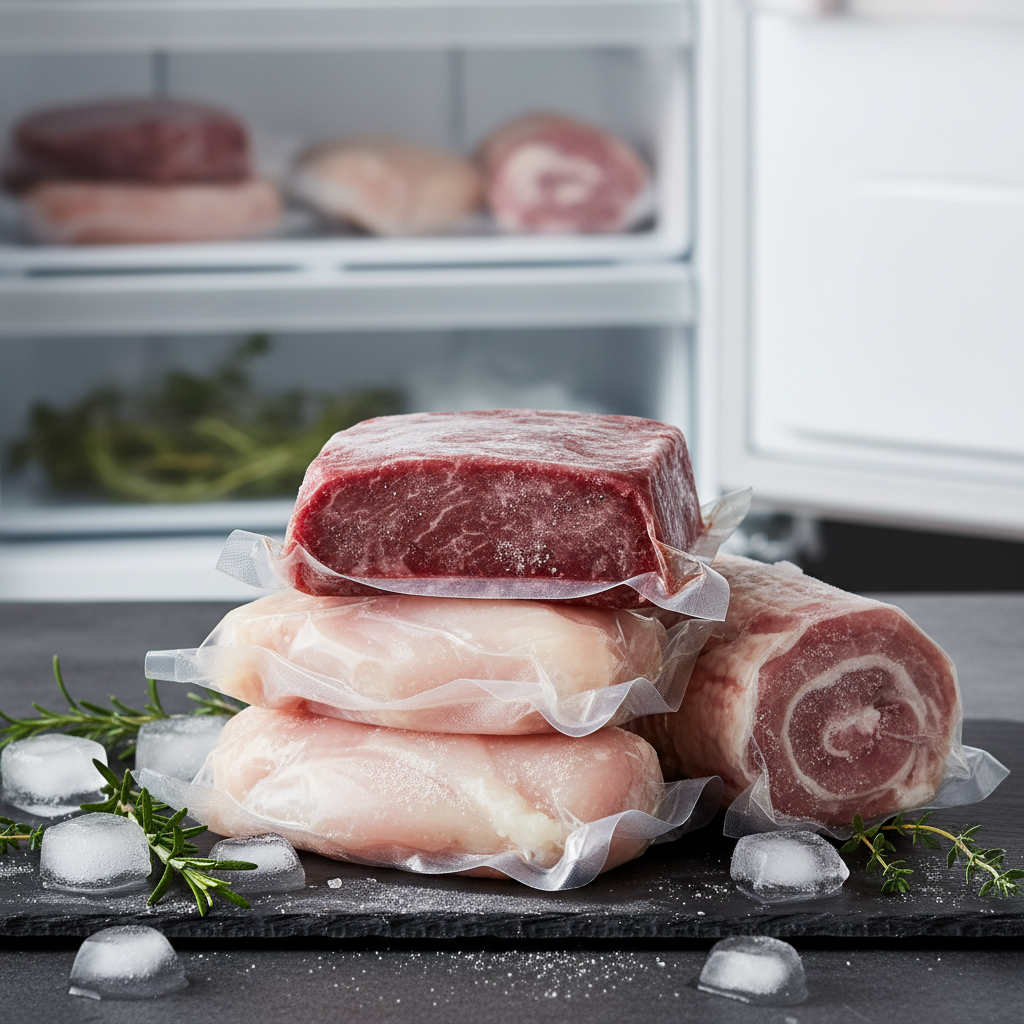
The Long-Term Storage Debate: Is Frozen Meat Safe After Twelve Months?
In the modern kitchen, the freezer is often treated as a "pause button" for food. Whether you stocked up during a sale, bought half a cow from a local farmer, or simply forgot about a package of chicken breasts at the bottom of the deep freeze, you have likely asked yourself: "Is frozen meat safe after a year?"
The short answer, according to the United States Department of Agriculture (USDA), is a definitive yes—provided the meat has been kept constantly at 0°F (-18°C) or lower. From a strictly biological standpoint, food kept at this temperature remains safe indefinitely because the growth of pathogenic bacteria is completely halted. However, while safety is guaranteed, quality is a different story altogether.
In this guide, we will explore the science of sub-zero storage, how long specific meats truly last before they become unpalatable, and the critical steps you must take to ensure your year-old steak still tastes like a steak.
The Science of Sub-Zero Safety: How Freezing Works
To understand why meat stays safe for a year (and longer), we have to look at food microbiology. Meat spoilage is primarily caused by two factors: pathogenic bacteria (which make you sick) and spoilage bacteria (which make food smell and taste bad).
When meat is lowered to 0°F (-18°C), the water molecules within the muscle fibers turn into ice crystals. This process does more than just make the meat hard; it makes the water unavailable to microorganisms. According to the FDA, bacteria like Salmonella, E. coli, and Listeria enter a state of dormancy at these temperatures. They do not die, but they cannot multiply. As long as the power stays on and the temperature remains stable, the meat will never "expire" in a way that causes food poisoning.
However, enzymes naturally present in the meat remain slightly active even when frozen. Over the course of twelve months, these enzymes, along with oxidation (exposure to air), begin to break down the structure and flavor of the meat. This leads to the common issues associated with long-term freezing: freezer burn, rancid fats, and a "woody" texture.
"Is Frozen Meat Safe?" vs. "Is It Good?"
When consumers ask "is frozen meat safe," they are often actually asking if it will still taste good. It is vital to distinguish between microbial safety and organoleptic quality (texture, smell, and taste). After a year, you are no longer fighting bacteria; you are fighting chemistry.
The Menace of Freezer Burn
Freezer burn occurs when air reaches the surface of the meat and dries it out. This manifests as grayish-brown leathery patches. While these spots are not dangerous to eat, they are incredibly tough and flavorless. If your year-old meat is riddled with freezer burn, it may be safe to eat, but you likely won't enjoy it.
Oxidation and Fat Rancidity
Fat is the first thing to "go bad" in the freezer. Unlike lean muscle, fats are prone to oxidation, which creates a soapy or metallic "off" flavor. This is particularly prevalent in pork and fatty fish, which have higher concentrations of unsaturated fats that oxidize more quickly than beef.
How Long Meat Lasts: A Comprehensive Breakdown
While the USDA maintains that all frozen food is safe indefinitely, they provide "Quality Guidelines" to help consumers know when meat is at its peak. Below is a detailed look at how long different types of meat maintain their best quality.
| Type of Meat | Recommended Storage (0°F) | Condition After 1 Year |
|---|---|---|
| Whole Poultry (Chicken/Turkey) | 12 Months | Generally excellent if vacuum sealed. |
| Beef Roasts & Steaks | 6–12 Months | Good; may show slight texture changes. |
| Ground Beef/Turkey | 3–4 Months | Likely to have freezer burn/off-flavors by 12 months. |
| Pork Chops | 4–6 Months | Fats may begin to taste rancid after 6 months. |
| Bacon/Sausage/Processed Meats | 1–2 Months | Poor; high salt content accelerates rancidity. |
| Lean Fish (Cod, Tilapia) | 6–8 Months | Safe, but likely very dry after a year. |
Why Beef Lasts Longer than Pork
You may notice that beef has a longer quality shelf life than pork or poultry. This is due to the composition of the fats. Beef contains more saturated fats, which are more stable at low temperatures. Pork contains more unsaturated fats, which react more quickly with oxygen, even in the freezer.
Practical Tips: Reaching the One-Year Mark with Success
If you intend to keep meat for a year, the "grocery store wrap" (plastic wrap over a styrofoam tray) will not suffice. Air is the enemy of long-term storage. To maximize the frozen meat how long window, follow these professional preservation steps.
1. Vacuum Sealing: The Gold Standard
Removing all oxygen from the environment is the only way to effectively prevent oxidation and freezer burn for twelve months. A vacuum-sealed steak can last up to 2–3 years in the freezer and still taste fresh-cut when thawed.
2. The Double-Wrap Method
If you don't have a vacuum sealer, use the double-wrap technique. Wrap the meat tightly in heavy-duty aluminum foil or plastic wrap, ensuring no air pockets remain. Then, place the wrapped meat inside a heavy-duty freezer bag and squeeze out all remaining air before zipping it shut.
3. Constant Temperature
Avoid storing long-term meat in the freezer attached to your refrigerator. These doors are opened frequently, causing temperature fluctuations. If you plan to store meat for a year, use a chest freezer or a deep freeze. These units are designed to maintain a consistent 0°F and are rarely opened, preventing the "thaw-refreeze" cycles that destroy meat fibers.
4. Labeling and Organization
It sounds simple, but it is the most common failure point. Use a permanent marker to record the date and the type of cut. Use the "First In, First Out" (FIFO) method to ensure you are rotating your stock and using older items before they reach that one-year threshold.
How to Tell If Year-Old Meat Has Gone Bad
Sometimes, despite our best efforts, the freezer fails or a seal breaks. When you pull that package out after twelve months, use your senses to determine if it should stay on the menu or go in the trash.
- The Smell Test: Once the meat is fully thawed, it should smell like... meat. If it has a sour, ammonia-like, or "funky" odor, discard it immediately. This is a sign that spoilage bacteria took hold before the meat was frozen or during a power outage.
- The Texture Test: Thawed meat should be moist but not slimy. If there is a tacky or slimy film on the surface that doesn't wash off, it is likely spoiled.
- The Appearance: Freezer burn is okay (you can trim it off), but if the meat has developed a greenish or blackish hue, it has likely suffered from mold or bacterial growth during a temperature spike.
- The "Ice Crystal" Indicator: Deep, large ice crystals inside the packaging are often a sign of temperature fluctuation. If the meat is covered in a thick layer of "snow," it has likely dehydrated significantly and will be very dry.
The Cooking Fix: Saving "Old" Frozen Meat
What if the meat is safe but clearly past its prime? If you have a roast that has been in the freezer for 14 months and has some minor freezer burn, don't throw it away. You can often mask quality loss with specific cooking techniques.
Avoid Dry Heat: Grilling or searing an old steak will highlight its dryness. Instead, use moist-heat cooking. Braising, stewing, or using a slow cooker are excellent ways to reintroduce moisture into meat fibers that have been slightly dehydrated by the freezer.
Aggressive Seasoning: If the fats have a slightly "off" flavor, use bold spices, marinades, or acidic components (like vinegar or citrus) to balance the flavor profile. Chili, stews, and taco meats are the perfect destinations for year-old frozen cuts.
Safety During Thawing: The Final Hurdle
Even if the meat survived a year in the freezer perfectly, you can still make yourself sick during the thawing process. The CDC warns against thawing meat on the counter, as the "Danger Zone" (40°F - 140°F) allows bacteria to wake up and multiply on the surface while the center is still frozen.
Always thaw meat using one of these three approved methods:
- Refrigerator Thawing: The safest method. Allow 24 hours of thawing time for every 5 pounds of meat.
- Cold Water Thawing: Place meat in a leak-proof bag and submerge in cold tap water, changing the water every 30 minutes.
- Microwave Thawing: Use only if you plan to cook the meat immediately afterward, as some parts may begin to cook during the defrost cycle.
Conclusion: The Verdict on Year-Old Meat
Is frozen meat safe for a year? Absolutely. As long as your freezer has remained at a steady 0°F, you are in no danger of foodborne illness. The "expiration dates" we often feel in our heads are largely quality-based markers rather than safety deadlines.
To summarize, if you find a package of beef or poultry that has hit the 12-month mark:
- Check the seal for integrity.
- Inspect for excessive freezer burn.
- Thaw it safely in the refrigerator.
- If it smells and feels normal, cook it thoroughly—perhaps in a stew or slow cooker to ensure the best texture.
By following proper storage protocols—namely vacuum sealing and maintaining a consistent temperature—you can confidently feed your family meat that has been preserved for a year or more, reducing food waste and making the most of your grocery budget.