

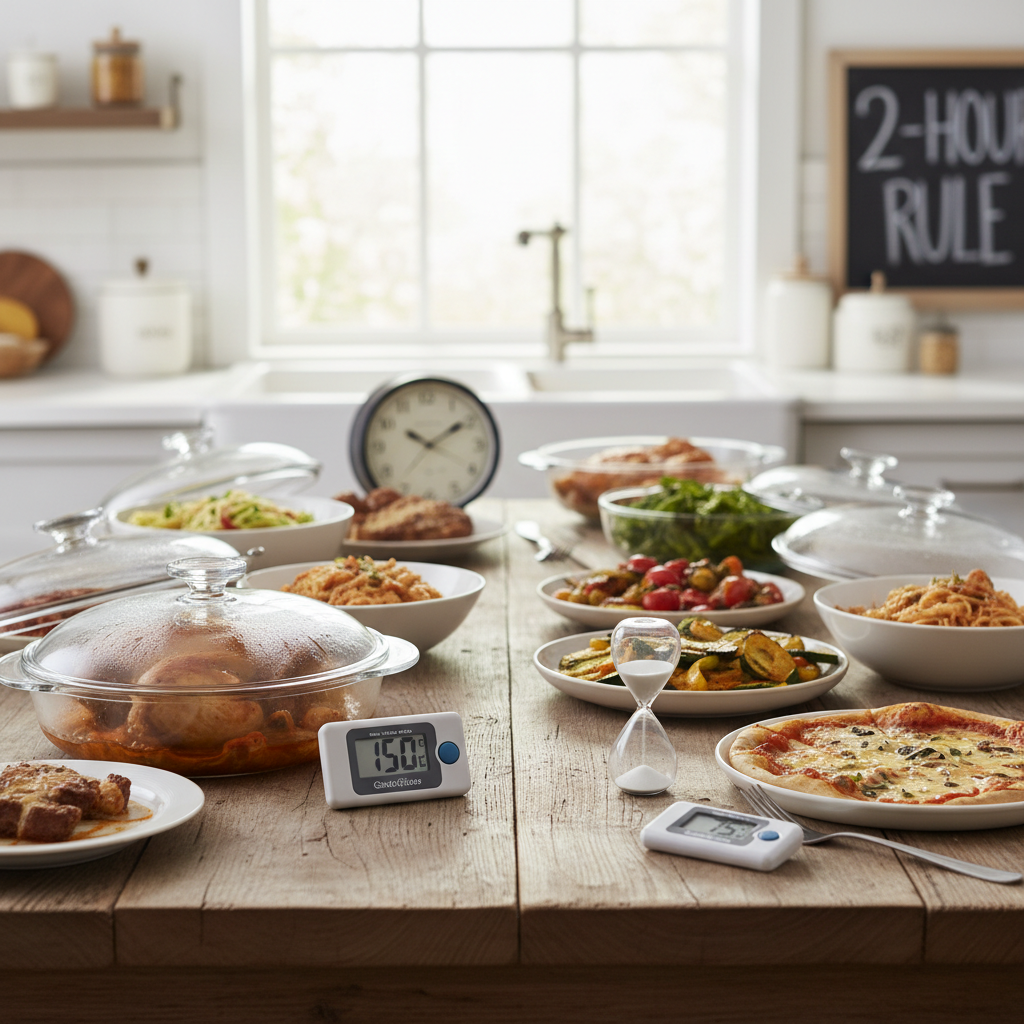
Understanding the 2-Hour Rule: The Golden Standard for Food Safety
Whether you are hosting a summer backyard barbecue, setting out a holiday buffet, or simply forgetting to put away the leftovers after a long dinner, the question of "how long can food sit out" is one of the most critical aspects of home food safety. While it may be tempting to graze on pizza left on the counter overnight or serve potato salad that has been sitting in the sun, doing so invites significant risks from foodborne illnesses.
According to the United States Department of Agriculture (USDA) and the Food and Drug Administration (FDA), the definitive answer is the "2-Hour Rule." This rule dictates that perishable foods should not be left at room temperature for more than two hours. Once this window closes, the risk of bacterial growth increases exponentially, making the food unsafe for consumption. In this comprehensive guide, we will break down the science behind this rule, exceptions for high temperatures, and specific guidelines for different types of food.
The Science of the "Danger Zone"
To understand why food cannot sit out indefinitely, we must look at the "Danger Zone." Food safety experts define the Danger Zone as the temperature range between 40°F (4°C) and 140°F (60°C). Within this specific window, bacteria such as Salmonella, Escherichia coli (E. coli), Staphylococcus aureus, and Campylobacter can double in number in as little as 20 minutes.
When food sits out at room temperature—typically averaging around 68°F to 72°F—it resides directly in the middle of the Danger Zone. The longer the food stays in this range, the more pathogens can multiply. By the time two hours have passed, the bacterial load on the food can reach levels high enough to cause food poisoning, even if the food looks, smells, and tastes perfectly fine.
The 1-Hour Exception: Outdoor Dining and Heat
While two hours is the standard limit, environmental factors can shorten this safety window. If you are eating outdoors or in a room without air conditioning where the ambient temperature is 90°F (32°C) or higher, the 2-hour rule is shortened to just 1 hour. In high heat, bacterial replication accelerates even further, and the moisture content in many foods can facilitate rapid spoilage.
What Qualifies as "Perishable" Food?
Not every item in your pantry is subject to the strict 2-hour limit. Understanding which foods are "Time/Temperature Control for Safety" (TCS) foods is essential for managing your kitchen. Generally, if a food requires refrigeration to stay fresh or was purchased from the refrigerated/frozen section of the grocery store, it is perishable.
- Meat and Poultry: Raw or cooked beef, chicken, turkey, pork, and lamb.
- Seafood: Fish, shellfish, and sushi.
- Dairy Products: Milk, cream, soft cheeses (brie, mozzarella), yogurt, and sour cream.
- Eggs: Fresh eggs, egg-based dishes like quiche, and custards.
- Cooked Plant Foods: Cooked rice, beans, pasta, and potatoes (including baked potatoes in foil).
- Cut Produce: Sliced melons, leafy greens, and tomatoes.
- Prepared Salads: Potato salad, coleslaw, and chicken salad, especially those containing mayonnaise or eggs.
Which Foods Are Generally Safe?
Conversely, some foods are stable at room temperature due to their low moisture content, high acidity, or high sugar content. Hard cheeses (like aged Parmesan), whole uncut fruits, bread, dry crackers, and certain condiments (like vinegar-based hot sauces or mustard) can typically sit out longer without immediate risk, though their quality may eventually degrade.
Food Safety Guidelines by Category
To help you navigate your kitchen safety, here is a detailed breakdown of how different food categories handle time spent out of the refrigerator.
| Food Category | Max Time at Room Temp (68°F-70°F) | Max Time in High Heat (90°F+) | Action Required |
|---|---|---|---|
| Cooked Meats & Poultry | 2 Hours | 1 Hour | Discard if limit exceeded. |
| Dairy & Soft Cheeses | 2 Hours | 1 Hour | Refrigerate promptly. |
| Pizza (with meat/cheese) | 2 Hours | 1 Hour | Do not eat if left out overnight. |
| Cut Melons & Greens | 2 Hours | 1 Hour | Bacteria thrive on cut surfaces. |
| Cooked Rice & Pasta | 2 Hours | 1 Hour | High risk for B. cereus spores. |
The Hidden Risk of Cooked Rice and Pasta
A common misconception is that starchy foods like rice and pasta are "safe" because they don't contain meat or dairy. However, Bacillus cereus is a bacterium commonly found in rice that produces heat-resistant toxins. Even if you reheat the rice later, the toxins may remain. This makes adhering to the 2-hour rule for leftovers like fried rice or spaghetti especially important.
Best Practices for Parties, Buffets, and Potlucks
Keeping food safe during a social gathering requires more than just a timer. If you plan to have food out for longer than two hours, you must use temperature control methods to keep food out of the Danger Zone.
Keeping Hot Foods Hot
Hot foods must maintain an internal temperature of 140°F or higher. To achieve this during a party:
- Use chafing dishes or warming trays with tea lights or electric heating elements.
- Utilize slow cookers (Crock-Pots) on the "warm" setting, ensuring the food stays above the 140°F threshold.
- Keep lids on pots and pans when not serving to retain heat and moisture.
Keeping Cold Foods Cold
Cold foods must stay at or below 40°F. If you cannot return the food to the refrigerator within two hours, try these tips:
- The Ice Bed Method: Nest serving bowls inside larger containers filled with crushed ice. As the ice melts, drain the water and replace it with fresh ice.
- Small Batches: Instead of putting out a giant bowl of potato salad, put out a small bowl and keep the rest in the refrigerator. Replenish the serving bowl as needed.
- Chill the Plates: Serving cold appetizers on chilled ceramic or marble platters can help maintain a lower temperature for a short duration.
Common Myths About Food Sitting Out
Misinformation about food safety can lead to unnecessary risks. Let's debunk some of the most common myths regarding how long food can sit out.
Myth 1: "If I reheat it, the bacteria will die anyway."
While high temperatures can kill active bacteria, they do not always destroy the toxins that certain bacteria (like Staphylococcus) produce while sitting on the counter. Reheating spoiled food might kill the germs, but the heat-stable toxins can still make you violently ill.
Myth 2: "The food looks and smells fine, so it must be safe."
Pathogenic bacteria that cause food poisoning are different from "spoilage" bacteria. You cannot see, smell, or taste the bacteria that cause most foodborne illnesses. By the time a food smells "off," it has likely been unsafe for quite some time.
Myth 3: "Mayonnaise makes food spoil faster."
Actually, commercial mayonnaise is highly acidic, which can actually slow bacterial growth. The real culprits in dishes like potato salad or chicken salad are usually the other low-acid ingredients—like potatoes, eggs, or chicken—which provide the perfect environment for bacteria to grow.
Actionable Tips for Everyday Food Safety
Implementing the 2-hour rule into your daily routine doesn't have to be difficult. Follow these practical steps to protect yourself and your family:
1. Use a Kitchen Timer
When you sit down to dinner, set a timer for 90 minutes. This gives you a "buffer" to enjoy your meal and still have 30 minutes to pack away leftovers before the 2-hour limit is reached.
2. The "Shallow Container" Trick
To help food cool down faster once it goes into the refrigerator, use shallow containers. Large pots of chili or soup can take hours to cool to 40°F in the center if stored in one deep container. Dividing them into smaller portions ensures they exit the Danger Zone quickly.
3. Don't "Counter-Thaw"
Never thaw frozen meat or poultry on the kitchen counter. As the outer layers reach room temperature, they enter the Danger Zone while the center is still frozen. Always thaw in the refrigerator, in cold water (changed every 30 minutes), or in the microwave if cooking immediately.
4. When in Doubt, Throw it Out
This is the most important mantra in food safety. If you lose track of time or are unsure how long a dish has been sitting on the counter, do not risk it. The cost of a meal is never worth the potential days of illness, medical bills, or long-term health complications associated with severe food poisoning.
The Consequences of Ignoring the 2-Hour Rule
According to the Centers for Disease Control and Prevention (CDC), roughly 1 in 6 Americans get sick from contaminated foods or beverages each year. Symptoms can range from mild upset stomach and diarrhea to life-threatening conditions like kidney failure or meningitis, particularly in vulnerable populations.
At-risk groups include:
- Adults aged 65 and older.
- Children under the age of 5.
- Pregnant individuals.
- People with weakened immune systems due to medical conditions or treatments.
For these individuals, adhering strictly to the 2-hour rule is not just a recommendation; it is a critical health necessity.
Conclusion: Stay Safe by Staying Mindful
In summary, the answer to "how long can food sit out" is clear: two hours at standard room temperature and one hour if the temperature is 90°F or above. By understanding the Danger Zone and the behavior of bacteria, you can confidently host parties, enjoy leftovers, and manage your kitchen without the fear of foodborne illness.
Food safety is about more than just rules; it's about developing habits that prioritize your long-term health. The next time you finish a meal, make it a priority to clear the table and refrigerate your perishables immediately. Your future self—and your stomach—will thank you.