

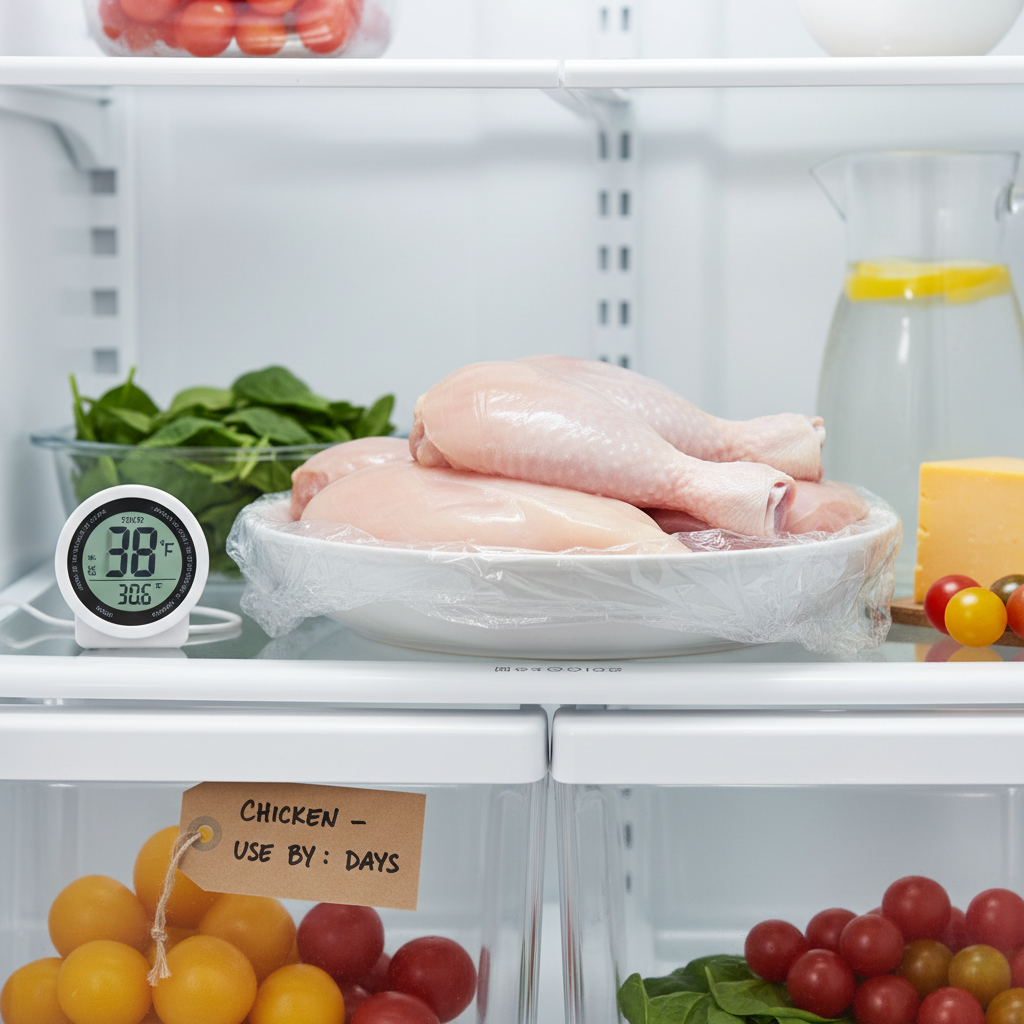
Understanding the Fragility of Raw Chicken
In the world of home cooking, few ingredients are as versatile or as ubiquitous as chicken. Whether you are prepping breasts for a salad, thighs for a slow cooker, or a whole bird for a Sunday roast, chicken is a staple in most American households. However, it is also one of the most hazardous ingredients in your kitchen if handled incorrectly. While many home cooks treat the "Best By" date on the packaging as a loose suggestion, food safety professionals adhere to a much stricter protocol: the 1-2 Day Rule.
According to the United States Department of Agriculture (USDA), raw chicken—including whole birds, individual pieces, and ground poultry—should only be kept in the refrigerator for one to two days before being cooked or moved to the freezer. This guideline often surprises consumers who are used to keeping red meat, like beef or pork, for up to five days. Understanding why chicken has such a short shelf life is the first step in protecting your household from foodborne illnesses.
The Science Behind the 1-2 Day Rule
Why is raw chicken so much more perishable than other proteins? The answer lies in its biological makeup and the way it is processed. Chicken meat has a high moisture content and a neutral pH, creating a virtual greenhouse for bacterial growth. Even when kept at "safe" refrigerator temperatures, certain bacteria can still multiply, albeit slowly.
Pathogenic vs. Spoilage Bacteria
It is crucial to distinguish between two types of bacteria that affect raw chicken in the fridge:
- Pathogenic Bacteria: These are the "silent killers," such as Salmonella, Campylobacter, and Listeria. These organisms cause food poisoning but typically do not change the smell, taste, or appearance of the meat. You cannot "sniff test" your way out of a Salmonella infection.
- Spoilage Bacteria: These bacteria cause the meat to develop a foul odor, a slimy texture, or a grayish color. While they might make you lose your appetite, they aren't always the ones that send you to the hospital.
The USDA's 1-2 day recommendation is designed to ensure that even if pathogenic bacteria were present at the time of purchase, they haven't had enough time to reach dangerous levels before heat is applied during the cooking process.
Optimal Temperature Controls: The "Danger Zone"
The clock starts ticking the moment the chicken is processed, but the speed of that clock depends entirely on temperature. The Food and Drug Administration (FDA) defines the "Danger Zone" as the temperature range between 40°F (4°C) and 140°F (60°C). Within this range, bacteria can double in number every 20 minutes.
For your raw chicken to last the full 48 hours allowed by the rule, your refrigerator must be set definitively below 40°F. Experts recommend a setting of 35°F to 37°F. If your fridge fluctuates or sits at 42°F, that two-day window shrinks significantly. Always use a standalone refrigerator thermometer to verify that your appliance is performing as expected, as built-in dials are notoriously inaccurate.
Storage Timeframes at a Glance
| Chicken Product | Refrigerator (40°F or below) | Freezer (0°F or below) |
|---|---|---|
| Whole Chicken or Turkey | 1–2 Days | 1 Year |
| Chicken Pieces (Breasts, Thighs) | 1–2 Days | 9 Months |
| Ground Chicken | 1–2 Days | 3–4 Months |
| Cooked Chicken (Leftovers) | 3–4 Days | 2–6 Months |
Where You Put Raw Chicken in the Fridge Matters
It isn't just about how long you store raw chicken in the fridge; it is also about where you put it. Proper placement prevents cross-contamination, which is the leading cause of foodborne illness in residential kitchens.
The Bottom Shelf Strategy: Always store raw chicken on the lowest shelf of your refrigerator. This prevents juices—which may contain live pathogens—from dripping onto ready-to-eat foods like fruits, vegetables, or leftover pizza. Even if the chicken is in its original plastic wrap, leaks are common.
Secondary Containment: To be extra safe, place the package of chicken on a rimmed baking sheet or inside a plastic bin. This catches any stray fluids and makes it easier to sanitize the area if a leak occurs. Never place raw chicken in the refrigerator door; the temperature fluctuations from opening and closing the fridge are most extreme in the door, which can accelerate bacterial growth.
Signs Your Raw Chicken Has Gone Bad
While we emphasize that you cannot always smell or see dangerous bacteria, you should never ignore obvious signs of spoilage. If your chicken has been in the fridge for more than two days, or if it shows any of the following signs within that window, discard it immediately:
1. The "Whiff" Test
Fresh raw chicken has a very mild scent, or virtually no scent at all. If you open the package and encounter a pungent, sour, or ammonia-like odor, the spoilage bacteria have taken over. Do not attempt to wash the chicken to remove the smell; water cannot "clean" meat and will only spread bacteria around your sink and counters.
2. Color Changes
Fresh chicken should be a healthy, light pink color with white fat. As it begins to spoil, the pink fades to a dull gray or a yellowish hue. If the fat starts to look green or particularly dark, the meat is no longer safe to consume.
3. Texture and Slime
Raw chicken is naturally moist, but it should not feel "slimy" or sticky. If there is a thick, mucous-like film on the surface of the meat that remains after you pat it dry with a paper towel, it is a sign of advanced bacterial activity.
The Myth of the "Sell-By" Date
One of the biggest reasons people ignore the 1-2 day rule is confusion over labeling. You might see "Sell-By," "Best-By," or "Use-By" dates on your poultry packaging. Here is the breakdown according to USDA guidelines:
- Sell-By Date: This is a guide for the retailer, not the consumer. It tells the store how long they can display the product. However, you should still aim to cook or freeze the chicken within two days of bringing it home, regardless of how far off the Sell-By date is.
- Use-By Date: This is the last date recommended for the use of the product while at peak quality. It is not a safety date, but for chicken, the safety margin after this date is extremely thin.
- The Reality: If you buy chicken on the "Sell-By" date, you must cook it that day or the next. You do not get an extra week just because the store was allowed to sell it that late.
How to Safely Extend the Shelf Life
If you realize you cannot cook your raw chicken within the 48-hour window, you have one primary option: the freezer. Freezing does not kill bacteria, but it does put them into a state of suspended animation, stopping the clock on spoilage.
To freeze chicken effectively, remove it from the store packaging if the plastic is thin or if there is excess "juice" in the tray. Wrap the chicken tightly in freezer paper or heavy-duty aluminum foil, then place it inside a vacuum-sealed bag or a freezer-safe Ziploc bag. Removing as much air as possible prevents freezer burn, which ruins the texture of the meat even if it remains safe to eat.
Safe Thawing Practices
Moving chicken from the freezer back to the fridge requires planning. You must stay within the safety guidelines during the thawing process. There are three approved ways to thaw chicken:
- Refrigerator Thawing: Move the chicken to the fridge 24 hours before you need it. This is the safest method. Once thawed, the 1-2 day rule resets—you have two days to cook it.
- Cold Water Thawing: Place the chicken in a leak-proof bag and submerge it in cold tap water. Change the water every 30 minutes. Cook immediately after thawing.
- Microwave Thawing: Use the defrost setting. Because microwaves can create "hot spots" where the chicken starts to cook, you must cook it immediately to prevent bacteria from growing in those warm areas.
Actionable Tips for Smart Chicken Shopping
To ensure you are always following the 1-2 day rule without wasting food or money, adopt these professional kitchen habits:
- Shop Last: Pick up your chicken at the very end of your grocery trip so it spends the least amount of time in your cart and car.
- Use an Insulated Bag: If you live more than 15 minutes from the grocery store, use an insulated bag with an ice pack to keep the poultry under 40°F during transit.
- Label Everything: Use a permanent marker to write the date of purchase on the packaging. Don't rely on your memory; "yesterday" quickly turns into "three days ago" in a busy household.
- The "Freeze by Default" Rule: If you don't have a specific meal plan for the chicken for tonight or tomorrow night, put it in the freezer immediately upon returning from the store.
The Consequences of Failure: Foodborne Illness
It is easy to become complacent if you've never been sick from "old" chicken, but the risks are statistically significant. The Centers for Disease Control and Prevention (CDC) estimates that Salmonella causes more foodborne illnesses than any other bacteria, and chicken is a major vehicle for these infections. Symptoms include severe abdominal cramps, diarrhea, fever, and vomiting. In vulnerable populations—such as children, the elderly, and those with weakened immune systems—these infections can be life-threatening.
Respecting the 1-2 day rule isn't just about avoiding a bad smell; it's a fundamental pillar of kitchen safety that protects your family from preventable illness.
Conclusion: Stay Safe by Staying Fresh
The 1-2 day rule for raw chicken in the fridge is a non-negotiable standard for anyone serious about food safety. By maintaining a cold refrigerator, storing meat on the bottom shelf, and being honest about spoilage signs, you can enjoy your favorite chicken dishes with total peace of mind. Remember: when it relates to poultry, "When in doubt, throw it out." It is never worth risking your health for the price of a pack of chicken breasts.
For more expert guides on food storage and kitchen safety, stay tuned to our latest updates and keep your refrigerator thermometer handy!