

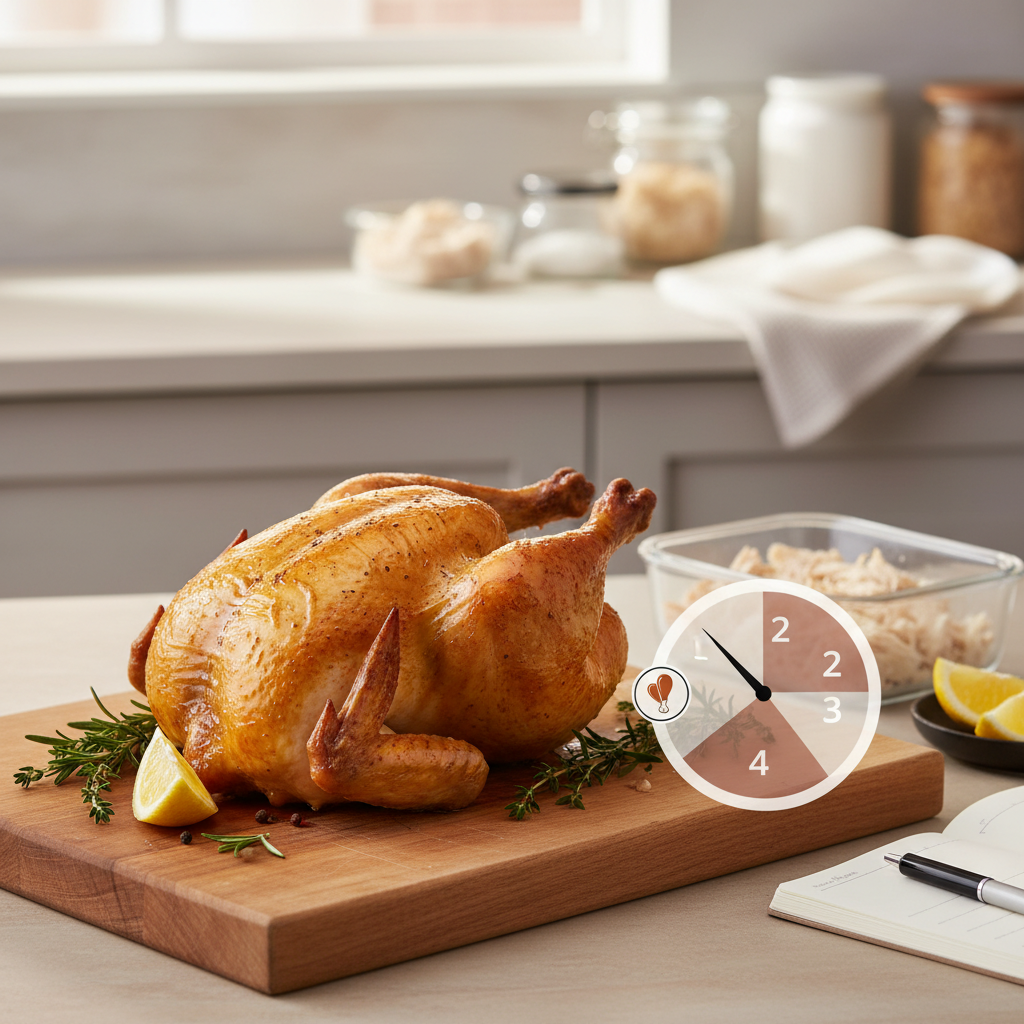
The Convenience and the Clock: Understanding Rotisserie Chicken Longevity
The rotisserie chicken is the unsung hero of the modern kitchen. It is a time-saving, protein-packed solution for busy families and meal-preppers alike. However, because it is purchased hot and fully cooked, it enters a unique food safety category that many consumers misunderstand. Unlike raw meat, which has a predictable window in your refrigerator, a rotisserie chicken is "ready-to-eat," meaning the moment it leaves the warming rack at the grocery store, the metaphorical clock begins to tick.
The question most frequently asked by home cooks is: "How long does rotisserie chicken last?" According to the United States Department of Agriculture (USDA), that window is shorter than you might expect. To maintain both safety and quality, the standard guideline is three to four days in the refrigerator. In this comprehensive guide, we will explore the science behind this "4-day clock," the critical importance of the "Danger Zone," and how you can extend the life of your chicken through proper storage and freezing techniques.
The Golden Rule: The 4-Day Window Explained
When you bring a rotisserie chicken home, you are dealing with a perishable product that has already undergone significant heat treatment. While the cooking process kills initial bacteria like Salmonella and Campylobacter, the chicken is not sterile. Once it begins to cool, it becomes a prime environment for spoilage bacteria and foodborne pathogens to re-establish themselves.
The USDA Food Safety and Inspection Service (FSIS) recommends that cooked poultry be consumed or frozen within four days of refrigeration. This timeframe is not a suggestion; it is a safety parameter designed to prevent the growth of Listeria monocytogenes, a bacterium that can actually grow at cold refrigerator temperatures (below 40°F), albeit more slowly than at room temperature.
Why is 4 Days the Limit?
- Bacterial Regrowth: Even in a refrigerator set to 38°F, microorganisms continue to multiply. By day five, the bacterial load on the chicken can reach levels that cause illness, even if the meat doesn't smell "off."
- Moisture Loss: After four days, the muscle fibers in the chicken begin to break down, and moisture evaporates, leading to a pithy, dry texture that is unappealing.
- Oxidation: Fats in the chicken skin and meat begin to oxidize, creating "warmed-over flavor" (WOF), which smells metallic or stale.
The Two-Hour Rule: The Most Critical Phase
Before the chicken even reaches your refrigerator, it faces its greatest safety hurdle: the "Danger Zone." This is the temperature range between 40°F and 140°F. In this range, bacteria can double in population every 20 minutes.
The FDA Food Code is very clear on this: cooked perishable foods should not be left out at room temperature for more than two hours. If the ambient temperature is above 90°F (for example, if the chicken is sitting in a hot car), that window shrinks to just one hour. Failure to refrigerate the chicken within this timeframe allows Staphylococcus aureus to produce heat-stable toxins that cannot be destroyed by subsequent reheating.
| Condition | Max Time at Room Temp | Action Required |
|---|---|---|
| Standard Room Temp (below 90°F) | 2 Hours | Refrigerate or Freeze Immediately |
| High Heat (above 90°F) | 1 Hour | Discard if time is exceeded |
| Internal Reheating Temp | Instantly | Must reach 165°F |
Optimizing Storage: How to Maximize Freshness
If you want to ensure your rotisserie chicken stays safe and delicious for the full four days, how you store it matters just as much as when. Simply tossing the plastic dome container from the grocery store into the fridge isn't always the best move.
Step 1: Rapid Cooling
You should never put a steaming hot, whole chicken directly into the refrigerator. This can raise the internal temperature of your fridge, potentially putting other perishable items (like milk or eggs) at risk. Instead, carved the chicken into smaller pieces or sections to allow heat to escape faster. Once it stops steaming but is still warm, move it to the fridge.
Step 2: Choosing the Right Container
Store-bought containers are often not airtight. Transfer your chicken to shallow, airtight containers or heavy-duty zip-top bags. Removing as much air as possible prevents the meat from drying out and shields it from absorbing "fridge odors" from other foods like onions or leftovers.
Step 3: Placement Matters
Store the chicken on the bottom shelf of your refrigerator. This is typically the coldest part of the unit and prevents any potential juices from dripping onto other foods (cross-contamination).
Signs of Spoilage: When to Toss It
While the four-day rule is your primary guide, you should always use your senses to check for spoilage. If you are unsure how long the rotisserie chicken has been in the fridge, or if it has been less than four days but looks suspicious, look for these "Red Flags":
- The Smell Test: A fresh chicken has a mild, savory aroma. Spoilage is indicated by a sour, ammonia-like, or "funky" sweet smell. If it smells pungent, discard it immediately.
- The Texture Test: Fresh chicken feels moist. If the meat feels slimy, tacky, or sticky to the touch, this is a sign of advanced bacterial growth (biofilm).
- The Color Test: Look for any grey or green hues. While some darkening is normal near the bones, a general greyish tinge to the white meat indicates it's past its prime.
- Mold: Visible fuzzy patches of white, green, or black are an obvious sign of spoilage. Do not attempt to cut off the moldy part; mold spores can penetrate deep into porous meat.
The Freezer Escape Hatch: Extending the Life to 4 Months
If you realize you aren't going to finish your rotisserie chicken within the four-day window, the freezer is your best friend. While the refrigerator buys you days, the freezer buys you months. The USDA states that frozen cooked chicken remains safe indefinitely if kept at 0°F, but for the best quality and flavor, it should be consumed within 4 months.
Tips for Freezing Rotisserie Chicken
For the best results, do not freeze the chicken whole. The skin will become rubbery, and the carcass takes up too much space. Instead:
- Shred the meat: Remove the meat from the bones while it is still slightly warm (not hot). Shredding it makes it easier to use in future dishes like soups or tacos.
- Portion Control: Freeze the meat in 1-cup or 2-cup portions in freezer-safe bags. This allows you to thaw only what you need.
- Label and Date: Use a permanent marker to label the bag with the date. Don't rely on your memory!
- The "Double Wrap": Wrap the bagged chicken in a layer of aluminum foil to prevent freezer burn, which causes dry, white patches on the meat.
Proper Reheating: Safety First
When you are ready to eat your refrigerated or thawed chicken, safety remains a priority. Reheating doesn't just make the food pleasant to eat; it serves as a final "kill step" for any bacteria that may have accumulated.
According to the CDC, cooked leftovers should be reheated to an internal temperature of 165°F (74°C). Use a digital food thermometer to check the thickest part of the meat. If you are reheating in the microwave, cover the dish and rotate it halfway through to ensure there are no cold spots where bacteria might survive.
Recommended Reheating Methods
- Oven: 350°F for 15-20 minutes. Add a splash of chicken broth to the dish and cover with foil to retain moisture.
- Stovetop: Ideal for shredded meat. Toss in a pan with a little butter or oil over medium heat until steaming.
- Air Fryer: Great for crisping the skin. 350°F for 3-5 minutes.
The Environmental and Economic Impact of the 4-Day Clock
Understanding the "how long does rotisserie chicken last" mystery isn't just about health; it's about reducing food waste. Americans throw away roughly 30-40% of the food supply, with prepared meats being a significant contributor. By sticking to the 4-day rule and proactively using the freezer, you save money and reduce your household's environmental footprint.
Plan your meals around the chicken:
- Day 1: Hot dinner with sides.
- Day 2: Cold chicken salad or sandwiches for lunch.
- Day 3: Chicken tacos, enchiladas, or pasta.
- Day 4: Use the remaining scraps (and the carcass!) to make a quick chicken stock.
Conclusion: Stay Safe and Savvy
The rotisserie chicken is an incredible tool for the modern cook, but its convenience shouldn't lead to complacency. Remember that the 4-day clock starts the moment you leave the store. By ensuring the chicken is refrigerated within two hours, stored in airtight containers below 40°F, and reheated to 165°F, you can enjoy this versatile protein without any risk to your health.
Always trust your nose and your thermometer. If you reach day five and the chicken looks fine, it's still safer to follow the USDA guidelines and discard it. After all, the cost of a new chicken is nothing compared to the cost of a foodborne illness. Keep your kitchen safe, your meals delicious, and your fridge organized!