

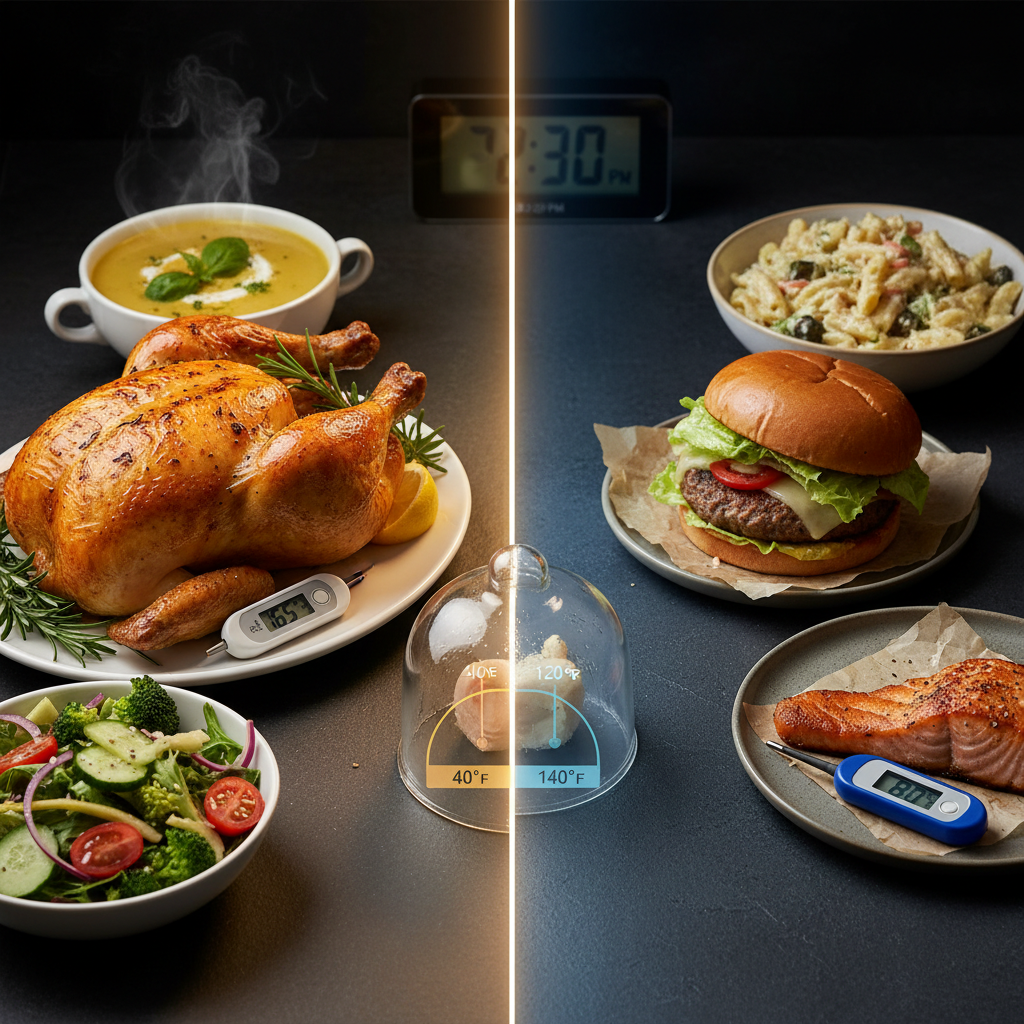
Understanding the Food Temperature Danger Zone
In the world of food safety, there is perhaps no concept more critical for the home cook than the Temperature Danger Zone. Whether you are hosting a summer barbecue, preparing a holiday feast, or simply packing a school lunch, understanding how temperature affects bacterial growth is the difference between a delicious meal and a preventable case of foodborne illness. According to the Centers for Disease Control and Prevention (CDC), roughly 48 million Americans get sick from foodborne diseases each year. A significant portion of these illnesses can be traced back to improper temperature control.
This comprehensive guide will break down the science behind the danger zone, the specific temperatures you must memorize, and the actionable steps you can take to keep your kitchen safe. By mastering these guidelines, you protect your family and guests from pathogens like Salmonella, E. coli, and Listeria.
What is the Temperature Danger Zone?
The food temperature danger zone is the specific temperature range in which foodborne bacteria can grow most rapidly. Within this window, a single bacterium can double every 20 minutes. If left long enough, a small amount of contamination can turn into a toxic level of bacteria that can survive the cooking process or produce heat-stable toxins.
The United States Department of Agriculture (USDA) and the Food and Drug Administration (FDA) define the Temperature Danger Zone as the range between 40°F and 140°F (4°C and 60°C). Within this range, bacteria thrive, particularly in "Time/Temperature Control for Safety" (TCS) foods.
The "Two-Hour Rule"
It isn't just about the temperature; it is about time. Food should never be left in the danger zone for more than two hours. If the ambient temperature is above 90°F (32°C)—such as at an outdoor picnic in the summer—that time limit drops to just one hour. After this window, the risk of bacterial growth is high enough that the food should be discarded. This rule applies to both the cooling process and the time food sits out on a serving table.
High-Risk Foods: What are TCS Foods?
While all food should be handled with care, certain foods are much more susceptible to rapid bacterial growth. These are known as TCS foods (Time/Temperature Control for Safety). These foods generally have high moisture content, high protein content, and a neutral to slightly acidic pH level.
- Meat and Poultry: Beef, pork, chicken, turkey, and lamb (raw or cooked).
- Seafood: All fish, shellfish, and crustaceans.
- Dairy: Milk, cheese, yogurt, and butter-based sauces.
- Eggs: Fresh shell eggs and dishes containing eggs like quiches or custards.
- Cooked Plant Foods: Rice, pasta, beans, and potatoes.
- Cut Produce: Sliced melons, tomatoes, and leafy greens.
- Sprouts: Alfalfa and bean sprouts.
- Infused Oils: Garlic-in-oil mixtures that haven't been acidified.
Critical Temperature Benchmarks
To keep food safe, you must move it through the danger zone as quickly as possible. This involves three phases: refrigeration, cooking, and holding. Below is a breakdown of the critical temperatures every home cook should know.
| Category | Target Temperature | Safety Context |
|---|---|---|
| Refrigeration | 40°F (4°C) or below | Slows bacterial growth significantly. |
| Freezing | 0°F (-18°C) or below | Stops bacterial growth (but does not kill bacteria). |
| Ground Meats | 160°F (71°C) | Required for beef, pork, and lamb. |
| Poultry | 165°F (74°C) | Required for all chicken and turkey (whole or ground). |
| Hot Holding | 140°F (60°C) or above | Prevents bacteria from multiplying during service. |
| Reheating | 165°F (74°C) | Must be reached within 2 hours. |
Standard Cooking Temperatures for Safety
While the danger zone ends at 140°F, many foods require a higher internal temperature to ensure that specific pathogens are destroyed. The USDA Food Safety and Inspection Service (FSIS) recommends using a digital food thermometer to verify these internal temperatures:
145°F (63°C)
This is the safe internal temperature for whole cuts of beef, pork, veal, and lamb. It also applies to "finfish." After reaching this temperature, the USDA recommends a three-minute rest time for meats. During this rest, the temperature remains constant or continues to rise, which helps destroy pathogens.
160°F (71°C)
All ground meats (excluding poultry) must reach 160°F. Because the grinding process spreads surface bacteria throughout the meat, a higher internal temperature is required compared to a whole steak. This also applies to egg dishes like frittatas.
165°F (74°C)
This is the "magic number" for food safety. All poultry—including ground chicken and turkey—must reach 165°F. This temperature also applies to casseroles, leftovers being reheated, and any food cooked in a microwave.
The Science of Cooling: The Two-Stage Process
One of the most common ways home cooks accidentally enter the food temperature danger zone is during the cooling process. Placing a giant pot of hot chili directly into the refrigerator can raise the fridge's temperature and take several hours to cool the center of the pot, allowing bacteria to multiply in the middle.
Professional kitchens use a "Two-Stage Cooling" method, which is an excellent practice for home cooks as well:
- Stage 1: Cool food from 140°F to 70°F (60°C to 21°C) within two hours.
- Stage 2: Cool food from 70°F to 40°F (21°C to 4°C) within an additional four hours.
To speed up cooling, try portioning large meals into shallow containers, using an ice bath, or stirring frequently to release trapped heat.
Safe Thawing Practices
Thawing meat on the kitchen counter is a dangerous habit. The exterior of the meat will reach the danger zone while the interior remains frozen. The FDA recommends three safe ways to thaw food:
- In the Refrigerator: This is the safest method. It requires planning, as large items like turkeys can take days to thaw. The food remains at a constant, safe temperature below 40°F.
- In Cold Water: Place the food in a leak-proof plastic bag and submerge it in cold tap water. Change the water every 30 minutes. Food thawed this way must be cooked immediately.
- In the Microwave: Use the "defrost" setting. Microwave thawing is uneven, and some parts of the food may begin to cook. Food thawed in the microwave must be cooked immediately afterward.
How to Monitor Temperatures Like a Pro
You cannot see, smell, or taste the bacteria that cause food poisoning. Relying on "clear juices" or the color of the meat is unreliable. The only way to guarantee safety is with proper instrumentation.
Using a Food Thermometer
Invest in a high-quality, instant-read digital thermometer. When checking the temperature, insert the probe into the thickest part of the food, ensuring you aren't hitting bone, fat, or the pan. For thin items like burger patties, insert the probe through the side to get an accurate reading of the center.
Monitoring Your Appliances
Your refrigerator and freezer should have their own thermometers. Refrigerator thermostats are often inaccurate as they age. Ensure your fridge is set to 38°F (3°C) to provide a buffer, as the temperature will rise slightly every time you open the door. Your freezer should be at 0°F (-18°C) or lower.
The Danger Zone at Parties and Events
Buffets and potlucks are high-risk environments for the temperature danger zone. If you are serving food for an extended period, follow these guidelines:
Keeping Hot Foods Hot
Once food is cooked to its safe internal temperature, it must be held at or above 140°F. Use chafing dishes, slow cookers (on the "warm" setting), or warming trays. Remember that these devices are meant for holding, not for cooking. Food should already be hot when placed in them.
Keeping Cold Foods Cold
Cold foods, such as potato salad or shrimp cocktail, must be kept at 40°F or below. You can do this by nestling serving bowls in beds of crushed ice. If you cannot keep the food cold, you must strictly follow the two-hour rule and discard any leftovers.
Common Myths About the Danger Zone
"If I boil it again, it's safe." This is a dangerous misconception. While heat kills most active bacteria, some bacteria, like Staphylococcus aureus, produce toxins that are heat-stable. Boiling a contaminated sauce might kill the bacteria, but the toxins remain and can still make you sick.
"The food smells fine, so it must be okay." Pathogenic bacteria (the kind that make you sick) are different from spoilage bacteria (the kind that make food smell bad). Food can look, smell, and taste perfectly normal while being heavily contaminated with Salmonella or E. coli.
"I can leave pizza out overnight." Pizza contains dough (cooked plant food), sauce, and cheese (dairy). It is a TCS food and should be refrigerated within two hours. Leaving it on the counter overnight is a significant food safety risk.
Actionable Food Safety Checklist
To ensure your kitchen remains a safe environment, incorporate these habits into your daily routine:
- Check your fridge: Verify it is 40°F or below using a dedicated appliance thermometer.
- Use a probe: Always use an instant-read thermometer for meats, casseroles, and reheated items.
- The 2-Hour Rule: Set a timer when you take food off the stove or out of the fridge for a meal.
- Small batches: When serving large crowds, bring out small portions of cold food and keep the rest in the fridge.
- Wash hands: Cross-contamination can introduce bacteria into the danger zone; always wash hands after handling raw meat.
Conclusion
Managing the food temperature danger zone is the cornerstone of responsible home cooking. By keeping cold foods below 40°F and hot foods above 140°F, you effectively halt the rapid multiplication of harmful bacteria. While it may seem like a lot of numbers to remember, the "two-hour rule" and the "165°F" safety mark are your most powerful tools in preventing foodborne illness. Stay vigilant, use your thermometer, and when in doubt, "throw it out."
For more detailed information on internal cooking temperatures and food storage, visit resources provided by FoodSafety.gov and the USDA. Keeping your family safe starts with a single degree of difference.